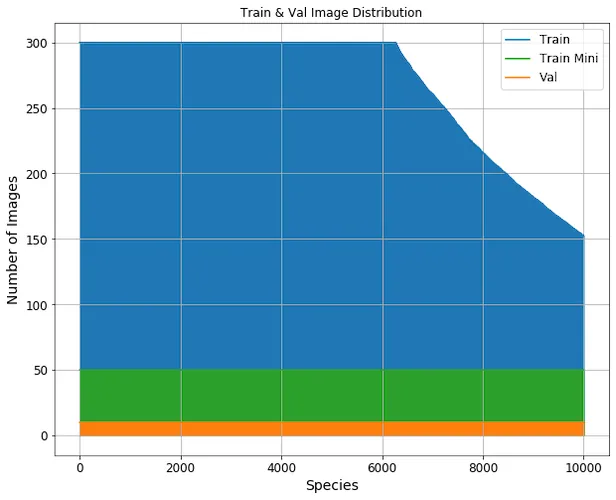
Nature datasets have the most extreme class imbalance in machine learning: a handful of common species dominate, and the species you most want to detect are the rarest.
The long tail here is not a nuisance to be smoothed away — it is the actual problem. A camera trap survey yields thousands of images of common animals and a handful of the endangered species the survey exists to monitor. A classifier optimised for overall accuracy learns to ignore exactly the classes that matter, which makes per-class metrics and few-shot methods essential rather than refinements.
This category also has an unusually good relationship with open data. Museum digitisation programmes, citizen-science platforms and publicly funded biodiversity surveys have released substantial material under clear and often public-domain terms, so the licence situation here is simpler than in most of this site's dataset posts. What you trade for that is metadata consistency: identifications vary in confidence and taxonomy changes over time, so a species label is a dated judgement rather than a fixed fact.
| Dataset | Modality | Size | Licence | Best for |
|---|---|---|---|---|
| Deep Sea Corals & Sponges | Tabular | 500,000 observations | CC0 | Mapping and modelling deep-sea biodiversity |
| Cat Dataset | Image | 29,843 images | MIT | Small generative models |
| Insect Village Synthetic Dataset | Image | 25,000 files | CC BY-SA 3.0 | Insect species classification |
| Mammals Image Classification Dataset - 45 Animals | Image | 13,751 images | ODC-By | Animal image classification |
| Muffin vs Chihuahua - Binary Classification Dataset | Image | 5,917 images | CC0 | CNN for binary classification |
| Shells or Pebbles Classification | Image | 4,284 images | CC BY-SA 4.0 | Binary image classification on natural data |
| Graptoloidea Specimens Imaging | Image | 1,397 examples | CC BY 4.0 | Morphological analysis and classification |
| Horses or Humans Dataset | Image | 1,283 images | CC BY 2.0 | Binary classifiers in computer vision |
| Animals Detection Images Dataset | Image | 58,100 images | CC BY 2.0 | Animal detection across varied imagery |
| Landscape Pictures | Image | 4,319 images | Unclear — see below | Artistic style transfer |
Deep Sea Corals & Sponges
- Size
- Over 500,000 observations, CSV files, structured tabular formats
- Licence
- CC0: Public Domain
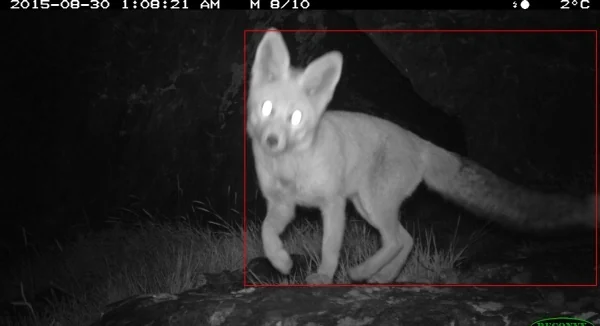
Over 500,000 NOAA observations of deep-sea corals and sponges below 50 metres, in structured CSV, with taxonomy, location, depth, sampling method and source. Tabular records, not imagery.
Mapping and modelling deep-sea biodiversity, predicting where corals and sponges occur from depth, location and habitat, and supporting deep-sea conservation policy.
Source: innovatiana.com
Cat Dataset
- Size
- 29,843 colour images, 64x64 pixel resolution
- Licence
- MIT
29,843 colour cat photographs at 64x64 resolution, covering various breeds, poses, backgrounds and lighting conditions. The low resolution and MIT licence make it a common choice for fast generative experiments.
Training small generative models such as GANs or VAEs on a single class, supplying the cat class for an animal classifier, and fast prototyping at 64x64 resolution.
Source: innovatiana.com
Insect Village Synthetic Dataset
- Size
- Around 25,000 files: synthetic images, COCO annotations in JSON format
- Licence
- CC BY-SA 3.0
Around 25,000 synthetic images of insects placed on varied backgrounds, generated with Python, edited in GIMP and annotated in COCO JSON format for both classification and detection. Fully synthetic, so labels are exact.
Training insect species classification, developing object detection systems, and testing models on synthetic data before transferring to real data.
Source: innovatiana.com
Mammals Image Classification Dataset - 45 Animals
- Size
- 13,751 JPG images, 256x256 pixel resolution, 45 classes
- Licence
- ODC Attribution License (ODC-by)
13,751 JPG mammal images at a uniform 256x256 resolution, sorted into 45 species classes with one folder per class. Uniform sizing and a high class count make it a decent fine-grained classification exercise.
Training animal image classification, developing automatic species recognition systems, and testing CNN architectures on varied animal images.
Source: innovatiana.com
Muffin vs Chihuahua - Binary Classification Dataset
- Size
- 5,917 JPEG images divided into 2 categories
- Licence
- CC0: Public Domain
5,917 labelled JPEG pictures of muffins and chihuahuas split into two classes. Built around the well-known visual near-collision, so it stresses whether a network relies on texture shortcuts or real structure.
Training a CNN for binary classification, testing robustness against visually similar images, and creating accessible AI demonstrations.
Source: innovatiana.com
Shells or Pebbles Classification
- Size
- 4,284 JPG images divided into two classes
- Licence
- CC BY-SA 4.0
4,284 JPG images sorted into Shell and Pebble classes. A small natural-object binary task, useful for data augmentation and few-shot experiments where classes share colour and texture statistics.
Training binary image classification on natural data, developing a beach object recognition app, and experimenting with augmentation, fine-tuning or few-shot learning.
Source: innovatiana.com
Graptoloidea Specimens Imaging
- Size
- 1,397 examples, metadata and image URLs, Parquet format, 87.7 KB
- Licence
- CC-BY 4.0
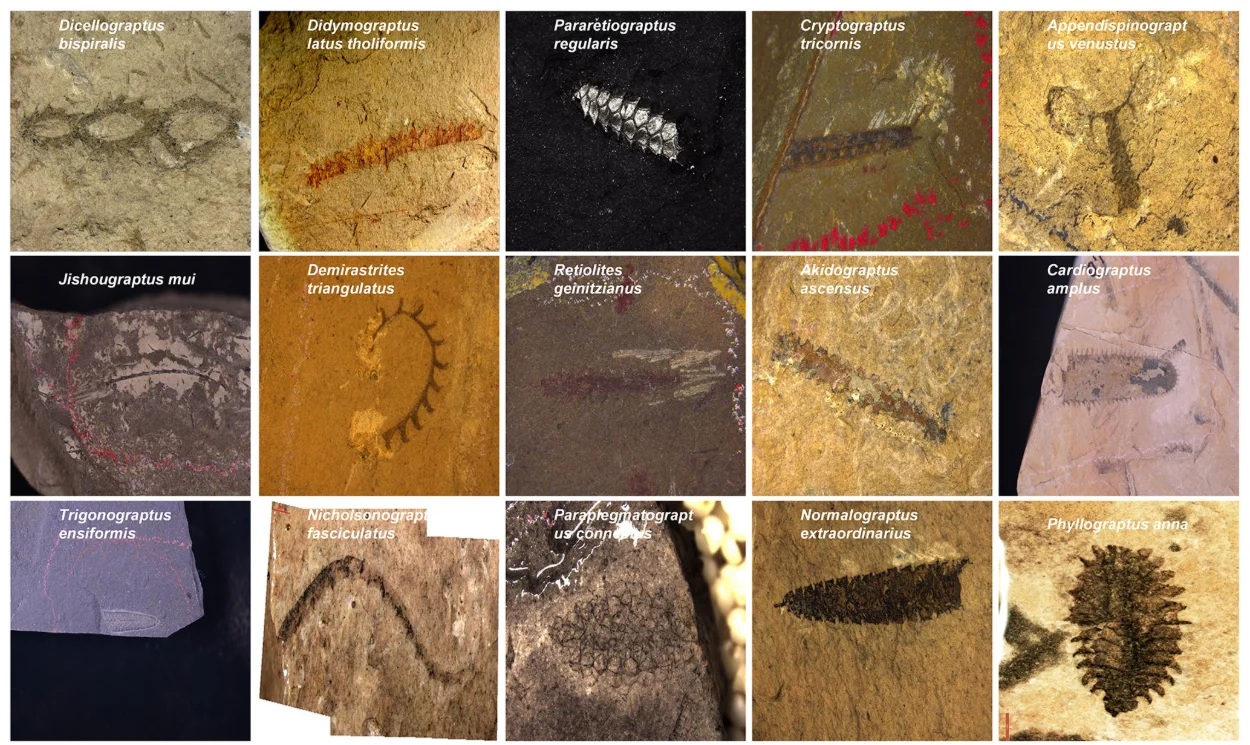
1,397 examples in an 87.7 KB Parquet file holding image URLs and metadata for Graptoloidea fossil specimens, with taxonomy, geological age and geographic location. Images are referenced rather than bundled.
Morphological analysis and classification of Graptoloidea species, estimating geological age and stratigraphic correlation, and studying geographic distribution and ancient migrations.
Source: innovatiana.com
Horses or Humans Dataset
- Size
- 1,283 300x300 pixel images in JPEG/PNG format
- Licence
- Creative Commons Attribution 2.0 (CC BY 2.0)
1,283 photorealistic 300x300 images of horses and humans in varied poses and settings, with deliberate ethnic and gender diversity among the human subjects. A teaching set for binary classification.
Training binary classifiers in computer vision, testing generalisation on photorealistic images, and supporting deep learning and CNN teaching.
Source: innovatiana.com
Animals Detection Images Dataset
- Size
- Approximately 58,100 annotated images for object detection, various formats (JPEG, PNG)
- Licence
- Labelled CC0 by the uploader; drawn from Open Images (images CC BY 2.0, annotations CC BY 4.0)
Over 58,000 images of various animal species in JPEG and PNG, drawn from Google Open Images V6 and later, with bounding-box annotations for object detection. Detection-ready. Despite the CC0 tag on this copy, Open Images photos are listed as CC BY 2.0 and its annotations are CC BY 4.0, so attribution is required.
Training animal detection across varied imagery, improving wildlife surveillance and conservation systems, and testing vision algorithms on real data.
Source: innovatiana.com
Landscape Pictures
- Size
- 4,319 JPG images, various categories (mountain, desert, sea, beach, island, Japan)
- Licence
- Labelled CC0 by the uploader; photographs collected on Flickr
About 4,319 real Flickr landscape photographs in JPG, spanning mountain, desert, sea, beach, island and Japan categories. Collected with style transfer in mind rather than classification. The photographs were collected on Flickr, so the uploader's CC0 tag does not clear them.
Testing artistic style transfer such as CartoonGAN, classifying or segmenting landscape images, and training GANs to generate realistic or stylised images.
Source: innovatiana.com
How this list was put together
Drawn from the datasets in Dataset Finder filed under this topic, then checked by hand against what this page covers. A tag is a filing decision, not a description, so records that carried the tag without being about the topic were removed, and relevant records filed elsewhere were added. The order puts the closest fit first.
Sizes and licences come from each dataset's own documentation, vague wording included. Where we found a re-upload or catalogue card stating a licence that the original release contradicts — a CC0 tag on Flickr photographs, MIT on data whose terms require a signed agreement — the entry gives the original terms and says so. The comparison table abbreviates licences; hover a cell for the full wording.