Datasets of people carry obligations that datasets of objects do not, and several widely cited face datasets have been withdrawn or restricted since publication for exactly that reason.
The legal position is the thing to establish first in this category. Facial images are personal data wherever the person can be identified, and once they are processed to identify or verify someone — which is what face-recognition training does — they are biometric data under GDPR. That brings consent requirements, purpose limitation and data-subject rights into scope regardless of whether the images were publicly accessible when collected. A permissive dataset licence does not resolve this, because the licence is granted by the compiler and the rights belong to the people depicted.
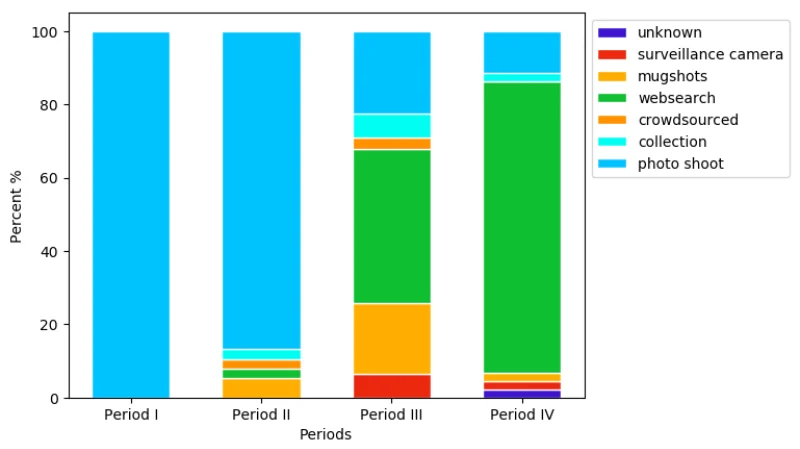
There is also a history here worth knowing. Several prominent face recognition datasets were withdrawn by their creators after it emerged that subjects had not consented to that use. If you are building on a dataset in this category, check its current status rather than citing a paper, and prefer sets with documented consent — which for commercial deployment is increasingly the only defensible position.
| Dataset | Modality | Size | Licence | Best for |
|---|---|---|---|---|
| HaGrid - Hand Gesture Recognition Image Dataset | Image | 552,992 images | CC BY-SA 4.0 variant | Gesture recognition for video calling |
| Deepfake and Real Images Dataset | Image | 190,000 images | CC BY 4.0 | Deepfake detection |
| Biggest GenderFace Recognition Dataset | Image | 27,167 images | CC0 | Facial classification by gender |
| Face Detection Dataset | Image | 16,700 images | CC0 | Deep learning face detection |
| Art Portraits | Image | 10,600 images | CC0 | GANs for artistic image generation |
| Human Faces | Image | 7,200 images | CC0 | Facial recognition robust to face diversity |
| Male and Female Faces Dataset | Image | 5,418 images | CC0 | Gender recognition from facial images |
| Glasses or No Glasses | Image | 5,002 images | CC BY-SA 4.0 | Binary with-or-without-glasses classification |
| Face Caption-15m | Image | 15M pairs | Research only | Generate natural facial descriptions |
| HumanCaption 10M | Image | 10M images | Research only | Natural captions for human images |
| Human Action Recognition HAR Dataset | Image | 18,000 images | Unclear — see below | Human actions from images |
HaGrid - Hand Gesture Recognition Image Dataset
- Size
- 552,992 Full HD images annotated in COCO + 21 landmark points, 18 classes
- Licence
- HaGRID licence: the authors' variant of CC BY-SA 4.0 (not a Creative Commons licence)
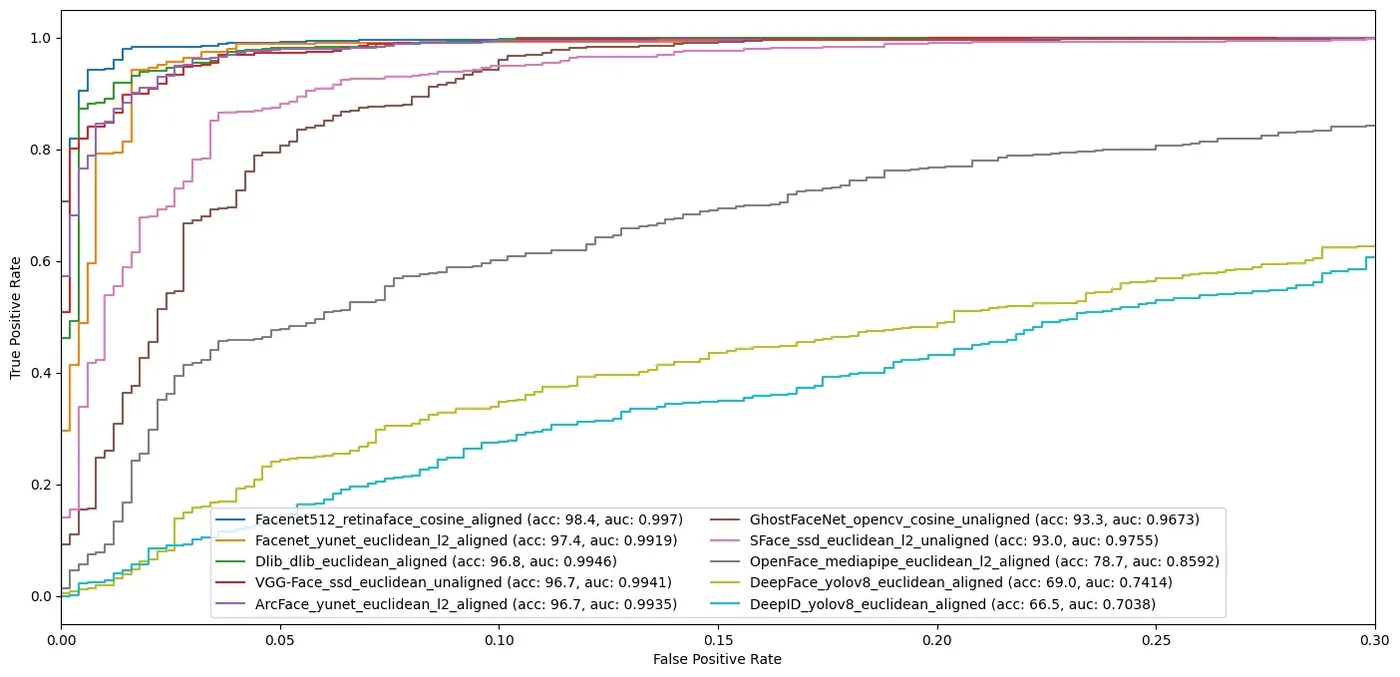
552,992 Full HD images annotated in COCO format with 21 hand landmark points, spanning 18 gesture classes plus a no-gesture class. That is the 2022 release; the current HaGRIDv2 has 1,086,158 images in 33 gesture classes. Both bounding boxes and landmarks are provided, covering detection and pose in one set.
Training gesture recognition for video calling, building gesture-controlled interfaces for vehicles or smart homes, and benchmarking hand detection and tracking.
Source: innovatiana.com
Deepfake and Real Images Dataset
- Size
- Approximately 190,000 256x256 pixel JPG images, real faces and deepfake
- Licence
- Creative Commons Attribution 4.0 International (CC BY 4.0)
Roughly 190,000 JPG face images at 256x256, mixing real faces with ones altered by various deepfake techniques. Large, uniform in size and CC BY licensed, making it the most convenient deepfake image set here, though the real faces are still identifiable people.
Developing and training deepfake detection, improving facial recognition security and fraud prevention, and studying generated and manipulated image techniques.
Source: innovatiana.com
Biggest GenderFace Recognition Dataset
- Size
- 27,167 JPG images, classified as male (17,678) and female (9,489)
- Licence
- CC0: Public Domain
27,167 JPG photographs of human faces split into 17,678 male and 9,489 female. Larger than most gender-classification sets but notably imbalanced, which matters if you report accuracy rather than balanced metrics.
Training facial classification by gender, developing automatic gender recognition, and testing CNN and vision transformer architectures for facial recognition.
Source: innovatiana.com
Face Detection Dataset
- Size
- 16,700 images with YOLO and pixel annotations
- Licence
- CC0: Public Domain
Roughly 16,700 face images, each labelled with bounding boxes supplied in both pixel-coordinate and YOLO formats. Dual annotation format means no conversion step whichever detector you use, and it is public domain.
Training deep learning face detection such as YOLO, SSD or Faster R-CNN, testing vision model accuracy and robustness, and creating security or biometric applications.
Source: innovatiana.com
Art Portraits
- Size
- 10,600 images in JPG format
- Licence
- CC0: Public Domain
Over 10,000 JPG artistic portrait images, pre-aligned and cleaned, assembled for training GAN models and other creative image-generation work. Alignment is the practical value: no face-cropping pipeline needed.
Training GANs for artistic image generation, exploring portrait styles in creative AI, and creating image transformation or stylisation tools.
Source: innovatiana.com
Human Faces
- Size
- Approximately 7,200 JPG images, various resolutions
- Licence
- CC0: Public Domain
Over 7,200 JPG face images at various resolutions, selected for ethnic, generational and morphological diversity, with some GAN-generated images deliberately mixed in. The synthetic inclusions double as a detection task.
Training facial recognition robust to face diversity, detecting GAN-generated images with specialised classifiers, and grouping or identifying individuals.
Source: innovatiana.com
Male and Female Faces Dataset
- Size
- 5,418 colour images, various resolutions
- Licence
- CC0: Public Domain
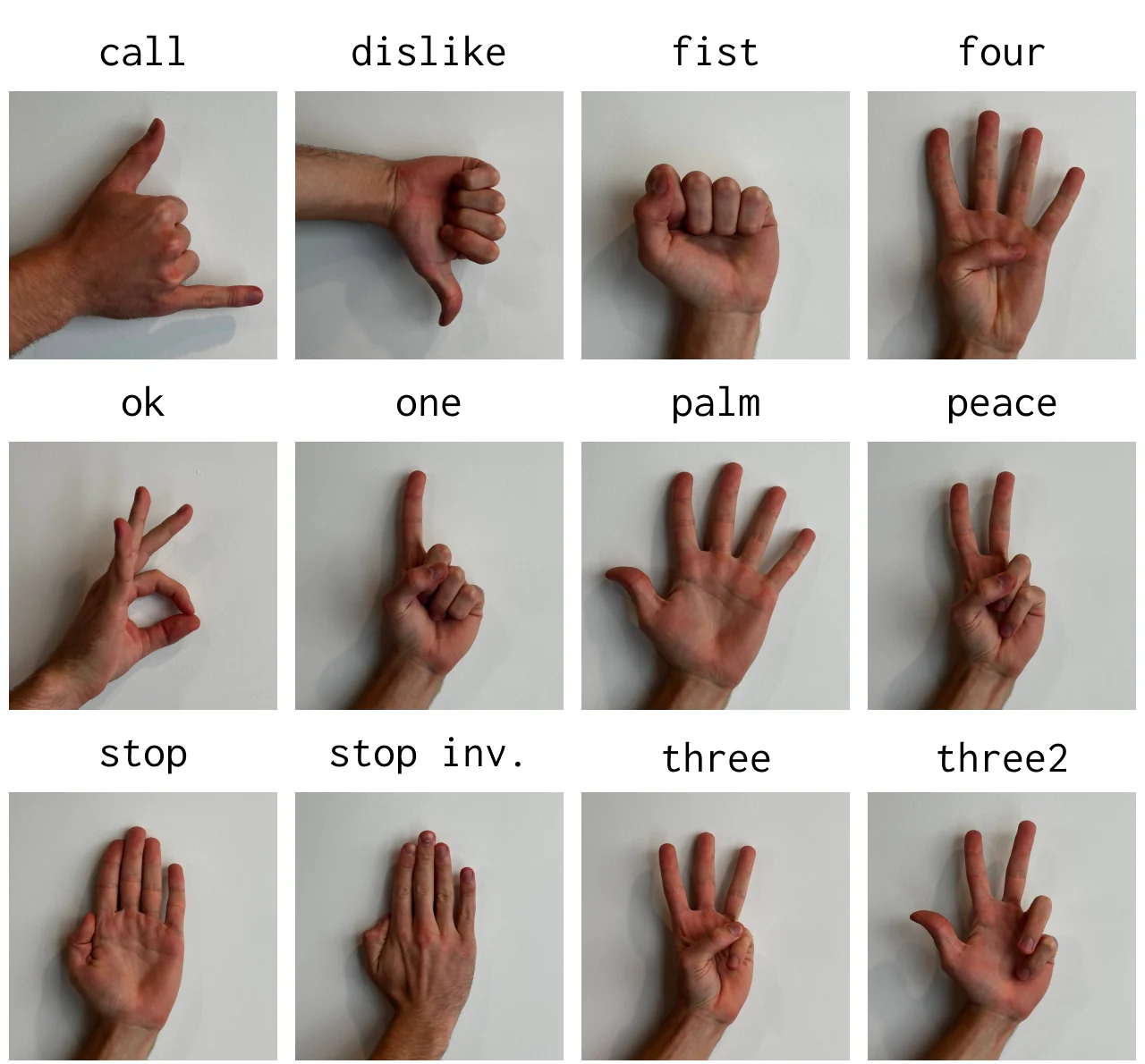
5,418 colour face images at various resolutions, roughly balanced at 2,700 male and 2,700 female, spanning multiple ethnicities and age groups with 12 to 13 percent elderly subjects. Deliberate demographic balancing.
Training gender recognition from facial images, studying ethnic and demographic diversity in image datasets, and developing gender classifiers or face generators.
Source: innovatiana.com
Glasses or No Glasses
- Size
- 5,002 JPG images with latent generation vectors
- Licence
- CC BY-SA 4.0
5,002 GAN-generated synthetic face images labelled as wearing glasses or not, shipped together with the latent vectors used to create them. The latent vectors enable controlled attribute-manipulation experiments.
Training binary with-or-without-glasses classification, testing model robustness on synthetic data, and experimenting with GAN latent vector image manipulation.
Source: innovatiana.com
Face Caption-15m
- Size
- Over 15 million image-description pairs (15.1M rows), 5+ partial GB in Parquet format
- Licence
- Tagged CC BY 4.0, but the card limits use to scientific research and education (images from LAION-Face)
Over 15 million facial image and description pairs in Parquet, more than 5 GB in partial release, with natural-language descriptions of varying length and detail. The images come from LAION-Face web scrapes, and despite the CC BY 4.0 tag the card allows use for scientific research and education only.
Training models to generate natural facial descriptions, improving multimodal face-text comprehension, and developing facial synthesis and detailed recognition.
Source: innovatiana.com
HumanCaption 10M
- Size
- Approximately 10 million human images with text descriptions, standard image formats, associated metadata
- Licence
- Tagged CC BY 4.0, but the card limits use to research and education (images from LAION-Face)
Roughly ten million human-centred photographs in standard image formats with accompanying metadata, each paired with a natural-language caption. Built for face and person-focused captioning rather than general scenes. The images come from LAION-Face, and despite the CC BY 4.0 tag the card limits use to research and education.
Generating natural captions for human images, improving facial recognition with contextual descriptions, and developing applications analysing people and human interaction.
Source: innovatiana.com
Human Action Recognition HAR Dataset
- Size
- Approximately 18,000 JPEG images divided into folders by classes
- Licence
- Open Database License (ODbL) probable — check the terms of use
About 18,000 still JPEG photographs sorted into folders across 15 everyday human activity categories. Still images rather than video, so it tests appearance-based action inference. The licence is stated only as probable ODbL.
Classifying human actions from images, building monitoring or behaviour-analysis systems, and evaluating CNN architectures for visual recognition.
Source: innovatiana.com
How this list was put together
Drawn from the datasets in Dataset Finder filed under this topic, then checked by hand against what this page covers. A tag is a filing decision, not a description, so records that carried the tag without being about the topic were removed, and relevant records filed elsewhere were added. The order puts the closest fit first.
Sizes and licences come from each dataset's own documentation, vague wording included. Where we found a re-upload or catalogue card stating a licence that the original release contradicts — a CC0 tag on Flickr photographs, MIT on data whose terms require a signed agreement — the entry gives the original terms and says so. The comparison table abbreviates licences; hover a cell for the full wording.