Finance and legal text is highly structured, highly specialised and heavily regulated, which makes domain data valuable and its handling consequential.
Models do badly on this material out of the box for a specific reason: the vocabulary looks like ordinary English and is not. A term of art in a contract, a line item in a filing, a citation format in a judgment — all carry precise meanings that a general model approximates. That is a knowledge gap rather than a behaviour gap, which usually means continued pretraining on domain text rather than instruction tuning.
The regulatory dimension is unusual here. Public filings and published judgments are generally available, and the compliance question is less about the source data than about what you do with the model: financial advice, legal advice and automated decisions affecting individuals are regulated activities in most jurisdictions regardless of how the model was trained. Worth establishing before the data question rather than after.
| Dataset | Modality | Size | Licence | Best for |
|---|---|---|---|---|
| S&P 500 Earnings Transcripts | Text | 33,362 transcripts | Research only | Analysing market sentiment through executive statements |
| Consumer Complaints Dataset | Text | 18.8M records | Open access (CFPB) | Analysing trends in financial services |
| Dataset Banking77 - Banking Customer Service Intentions | Text | 13,083 examples | CC BY 4.0 | NLP intent detection in banking |
| Bank Marketing | Tabular | 4 files | CC BY 4.0 | Supervised classification models |
| Fannie Mae Loan Performance Dataset | Text | Several million records | Research only | Default scoring and forecasting models |
| Sujet Finance QA Vision 100k | Multimodal | 107,050 pairs | Apache 2.0 | Visual question answering for complex documents |
| T2-Ragbench | Multimodal | 23,088 pairs | CC BY 4.0 | Extraction of information |
| IMF Data (International Monetary Fund) | Text | Several thousand economic indicators | IMF terms | Comparative studies between countries or regions |
| LexGlue | Text | 7 datasets | CC BY 4.0 | Robustness of multi-task models |
| BillSum - Summaries of American laws | Text | 23,000 documents | CC0 | Summarisation models for legislative texts |
| Text Anonymization Benchmark | Text | 1,268 documents | MIT | Automatic anonymisation |
| LLAMA2 Legal Dataset 4.4k Instructions | Text | 4,394 lines | Apache 2.0 | Legal models for summarisation |
| text | category |
|---|---|
| What are the charges for receiving a SEPA transfer? | top_up_by_bank_transfer_charge |
| What time will a transfer from the US take? | transfer_timing |
| Why on earth do you need so much personal id info from me? | why_verify_identity |
S&P 500 Earnings Transcripts
- Size
- 33,362 structured text transcripts per speaker, JSON format
- Licence
- Tagged MIT, but the card says research and educational use only
33,362 quarterly earnings call transcripts in JSON from 685 S&P 500 companies, structured by individual speaker and spanning 2005 to 2025. Speaker attribution is what makes it usable for executive-level sentiment work. The card pairs its MIT tag with 'for research and educational use only'.
Analysing market sentiment through executive statements, training summarisation for long economic content, and building financial QA or weak-signal detection models.
Source: innovatiana.com
Consumer Complaints Dataset
- Size
- About 18.8 million records (late 2026; the database is updated daily), CSV format
- Licence
- Open access — Public data provided by CFPB (Consumer Financial Protection Bureau)
About 18.8 million CSV records (October 2026) of US consumer complaints about financial products and services, published by the Consumer Financial Protection Bureau. Combines free-text narratives with structured product and resolution fields.
Analysing trends in financial services, training NLP models to detect complaints automatically, improving customer journeys, and identifying weak signals of risk.
Source: innovatiana.com
Dataset Banking77 - Banking Customer Service Intentions
- Size
- 13,083 text examples with intent labels (77 classes)
- Licence
- CC-BY 4.0
13,083 real banking customer service requests, each labelled with one of 77 fine-grained intent categories. The high class count over short utterances makes it the standard hard intent-classification benchmark.
Training NLP intent detection in banking, improving customer-service chatbots or voice assistants, and analysing user needs and frustrations in detail.
Source: innovatiana.com
Bank Marketing
- Size
- 4 CSV files: bank-full with 45,211 rows and 17 columns, and bank-additional-full with 41,188 rows and 20 inputs plus the target
- Licence
- CC BY 4.0 (UCI Machine Learning Repository)
Four CSV files, the largest holding 45,211 rows (a later version has 41,188 rows with 20 inputs including economic context), recording a Portuguese bank's telephone marketing campaigns and whether each customer subscribed to a term deposit. A classic tabular classification benchmark. UCI's original release is CC BY 4.0; the Apache 2.0 tag comes from a Kaggle re-upload.
Training supervised classification models, targeting campaigns at likely subscribers, and studying how socio-demographic factors relate to banking behaviour.
Source: innovatiana.com
Fannie Mae Loan Performance Dataset
- Size
- Several million records, CSV format
- Licence
- Free access for research and analysis, with registration required on the official platform
Several million CSV records of US residential mortgages guaranteed by Fannie Mae, tracking loan performance over time for analysing real-estate credit trends and modelling default risk. Registration on the official platform is required.
Training default scoring and forecasting models, analysing mortgage market stability, evaluating lending policies, and simulating macroeconomic housing scenarios.
Source: innovatiana.com
Sujet Finance QA Vision 100k
- Size
- 107,050 QA pairs, 9,801 images, structured format (JSON/image)
- Licence
- Apache-2.0
107,050 English question-answer pairs generated from 9,801 images of financial documents such as reports, tables and invoices, in a structured JSON and image format. Professional document VQA rather than natural scenes.
Developing visual question answering for complex documents, improving financial document analysis via OCR and semantic understanding, and refining multimodal LLMs.
Source: innovatiana.com
T2-Ragbench
- Size
- 23,088 QA pairs, 7,300+ documents with text and table contexts, PDF and JSON
- Licence
- CC-BY 4.0
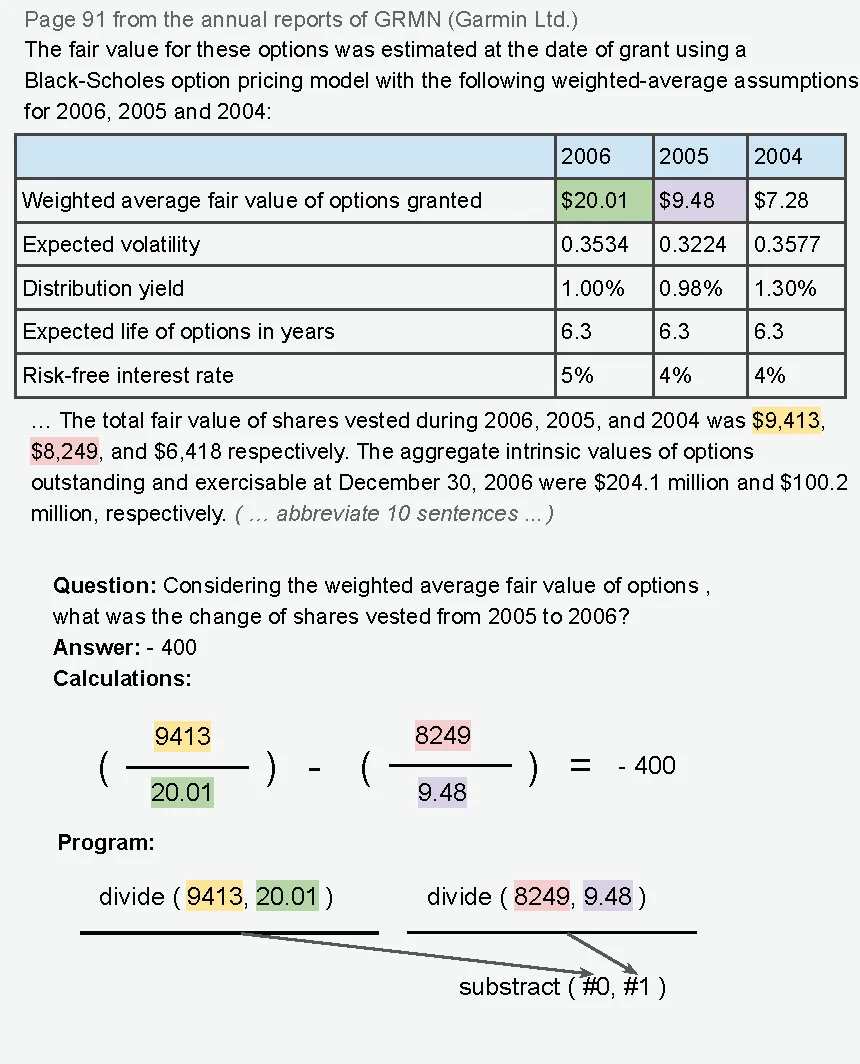
23,088 financial question-answer pairs with verified answers, grounded in more than 7,300 documents supplying both text and table context, distributed as PDF and JSON. Built specifically to test retrieval-augmented generation.
Evaluating extraction of information from complex text-and-table documents, testing RAG systems in a real financial context, and refining documentary QA systems.
Source: innovatiana.com
IMF Data (International Monetary Fund)
- Size
- Several thousand economic indicators, CSV and Excel format
- Licence
- IMF Copyright and Usage terms: reuse with attribution; commercial reuse and LLM training need the IMF's permission
Several thousand macroeconomic and financial indicators in CSV and Excel, maintained by the International Monetary Fund and covering countries worldwide. Free to reuse with attribution under the IMF's own terms, which require permission for commercial reuse and for training large language models.
Comparative studies between countries or regions, monitoring global macroeconomic trends, economic research, and training predictive models for growth or debt.
Source: innovatiana.com
LexGlue
- Size
- 7 legal datasets (classification and multiple-choice QA), JSON, thousands of annotated legal documents
- Licence
- CC-BY 4.0
A legal NLP benchmark combining seven annotated datasets in JSON, spanning classification and question answering over thousands of legal documents. The GLUE equivalent for law, and CC-BY licensed.
Testing robustness of multi-task models in a legal framework, training LLMs to understand and reason about legal documents, and developing LegalTech systems.
Source: innovatiana.com
BillSum - Summaries of American laws
- Size
- Approximately 23,000 documents, texts and summaries in JSON, total size ~340 MB
- Licence
- CC0 1.0
Roughly 23,000 full texts of US Congress and California bills paired with human-written summaries, in JSON totalling about 340 MB. Mid-length legislative summarisation (the authors kept bills of 5,000 to 20,000 characters and set very long bills aside), released into the public domain.
Training summarisation models for legislative texts, aiding search and comprehension of complex legal documents, and developing automated legal assistants.
Source: innovatiana.com
Text Anonymization Benchmark
- Size
- 1,268 documents in English in annotated JSON format
- Licence
- MIT
1,268 English judgments from the European Court of Human Rights in annotated JSON, marked up with named entities, their categories, their confidential status and coreference links between mentions. Purpose-built for anonymisation.
Training automatic anonymisation of legal or sensitive texts, studying bias around personal information in documents, and testing NER detection and masking systems.
Source: innovatiana.com
LLAMA2 Legal Dataset 4.4k Instructions
- Size
- 4,394 lines, Parquet format (~5 MB), text content
- Licence
- Apache 2.0
4,394 lines of legal instruction data in Parquet, about 5 MB, for tuning language models on legal understanding, generation and analysis. Small, but formatted ready for instruction fine-tuning and permissively licensed.
Fine-tuning legal models for summarisation, explanation and Q&A, simulating AI-assisted legal consultation, and evaluating accuracy in regulated areas.
Source: innovatiana.com
How this list was put together
Drawn from the datasets in Dataset Finder filed under this topic, then checked by hand against what this page covers. A tag is a filing decision, not a description, so records that carried the tag without being about the topic were removed, and relevant records filed elsewhere were added. The order puts the closest fit first.
Sizes and licences come from each dataset's own documentation, vague wording included. Where we found a re-upload or catalogue card stating a licence that the original release contradicts — a CC0 tag on Flickr photographs, MIT on data whose terms require a signed agreement — the entry gives the original terms and says so. The comparison table abbreviates licences; hover a cell for the full wording.