Detection is the most widely deployed vision task and the one where dataset choice most directly determines whether a model survives production.
Two properties matter more than size when picking a detection set. Class balance, because a long tail means your rare classes get ignored by a model optimising overall accuracy. And annotation completeness, because an unlabelled object in a training image is taught to the model as background — the single most damaging defect a detection dataset can have, and one that is invisible in the summary statistics.
Check the box convention before you train, too. Corner-based absolute pixels, centre-based normalised and two-corner absolute pixels are all in common use, and a conversion that goes the wrong way produces boxes that look fine on small objects and are badly wrong on large ones.
| Dataset | Modality | Size | Licence | Best for |
|---|---|---|---|---|
| COCO Dataset: Common Objects in Context | Image | 330,000 images | Mixed — see below | Object recognition |
| DOTA (Dataset for Object Detection in Aerial Images) | Image | 2,806 images | Research only | Aerial and satellite object detection |
| Dataset for Autonomous Cars - Annotated Images | Image | 22,200 images | MIT | Real-time object detection for autonomous cars |
| Military Aircraft Detection Dataset | Image | 77,500 files | Unclear — see below | Object detection for military aircraft |
| HaGrid - Hand Gesture Recognition Image Dataset | Image | 552,992 images | CC BY-SA 4.0 variant | Gesture recognition for video calling |
| Traffic Light Detection Dataset | Image | 2,600 images | CC0 | Vision models that detect and classify |
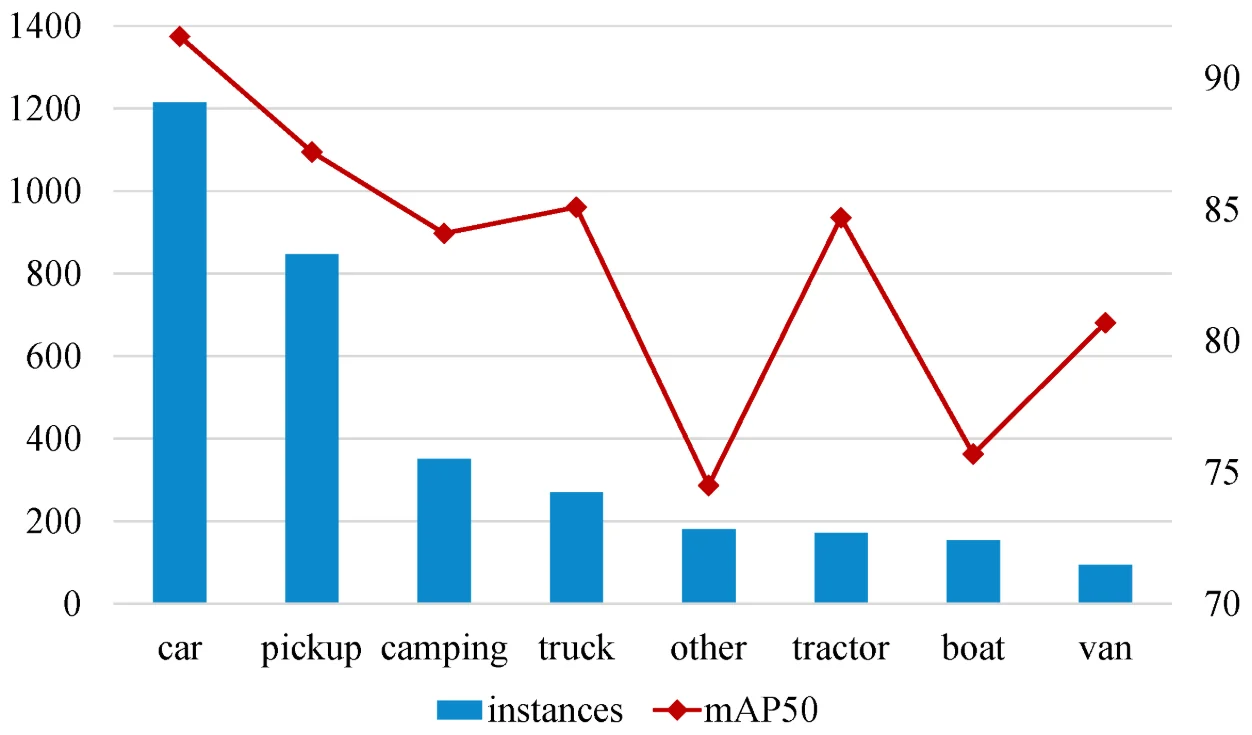
| Cars Detection Dataset | Image | 2,509 images | Apache 2.0 | Automotive object detection |
| Crop and Weed Detection Data with Bounding Boxes | Image | 1,300 images | CC0 | Object detection for precision farming |
| Mobile UI Design | Image | 7,846 images | Apache 2.0 | Object detection for mobile UI |
| Ships in Aerial Images | Image | 26,900 images | CC BY-SA 4.0 | Ship detection in aerial imagery |
COCO Dataset: Common Objects in Context
- Size
- Approximately 330,000 images in JPEG format, with JSON annotations
- Licence
- Annotations CC BY 4.0; images remain their Flickr owners' copyright under the Flickr Terms of Use
Roughly 330,000 JPEG images with JSON annotations supporting object detection, instance and panoptic segmentation, captioning and human pose. The single most widely used computer vision benchmark. Its annotations are CC BY 4.0, but the images stay under their Flickr owners' copyright and the Flickr Terms of Use, so the annotation licence does not clear commercial use of the images.
Object recognition, image segmentation, automatic image description, understanding complex scenes, and human pose detection.
Source: innovatiana.com
DOTA (Dataset for Object Detection in Aerial Images)
- Size
- 2,806 aerial images and 188,282 oriented boxes in v1.0 (larger in later versions)
- Licence
- Usable for academic research purposes, subject to specific DOTA license conditions
Aerial and satellite images (2,806 in DOTA-v1.0, with larger later versions) carrying 188,282 oriented-box annotations across 15 categories such as planes, ships, vehicles, storage tanks and harbours, often densely packed within a single scene. Oriented boxes and object density make it the hardest aerial detection benchmark here.
Training aerial and satellite object detection, recognising urban structures and vehicles, environmental monitoring, disaster management and automated mapping.
Source: innovatiana.com
Dataset for Autonomous Cars - Annotated Images
- Size
- 22,200 annotated images, tags: car, truck, pedestrian, cyclist, traffic light
- Licence
- MIT (Udacity's original release); this copy is labelled CC0
22,200 road images labelled across classes including car, truck, pedestrian, cyclist and traffic light, aimed squarely at autonomous driving object detection. Udacity released the original under MIT, so it is lightly encumbered: attribution rather than public domain, whatever this copy's CC0 tag says.
Training real-time object detection for autonomous cars, testing segmentation accuracy, and simulating driving environments in AI frameworks.
Source: innovatiana.com
Military Aircraft Detection Dataset
- Size
- Approximately 77,500 JPG files and CSV annotations, 164,000 annotations in PASCAL VOC format
- Licence
- Unknown license (use to be verified)
Roughly 77,500 JPG files with CSV annotations and 164,000 bounding boxes in PASCAL VOC format, covering 81 military aircraft types. Much larger than the similarly named 4,388-image set, but the licence is unknown.
Training object detection for military aircraft, improving fine-grained aircraft type recognition for surveillance and defence, and testing vision algorithms in complex conditions.
Source: innovatiana.com
HaGrid - Hand Gesture Recognition Image Dataset
- Size
- 552,992 Full HD images annotated in COCO + 21 landmark points, 18 classes
- Licence
- HaGRID licence: the authors' variant of CC BY-SA 4.0 (not a Creative Commons licence)
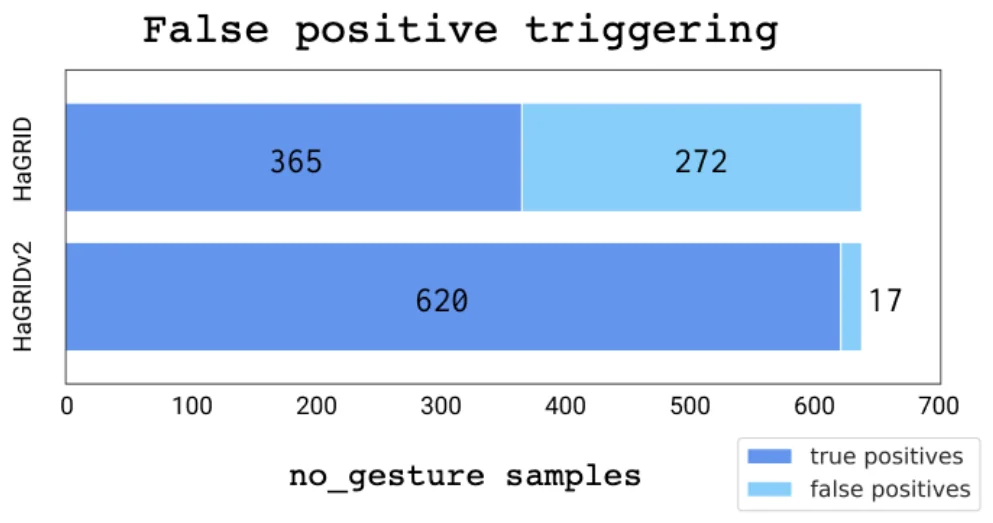
552,992 Full HD images annotated in COCO format with 21 hand landmark points, spanning 18 gesture classes plus a no-gesture class. That is the 2022 release; the current HaGRIDv2 has 1,086,158 images in 33 gesture classes. Both bounding boxes and landmarks are provided, covering detection and pose in one set.
Training gesture recognition for video calling, building gesture-controlled interfaces for vehicles or smart homes, and benchmarking hand detection and tracking.
Source: innovatiana.com
Traffic Light Detection Dataset
- Size
- Approximately 2,600 annotated images with categories and colours
- Licence
- CC0: Public Domain
About 2,600 annotated images covering nine traffic-light categories together with their signal colours. Small, public domain and focused, it suits bolt-on traffic-light recognition in a wider driving perception stack.
Building vision models that detect and classify traffic lights, improving driver assistance, and training urban object recognition.
Source: innovatiana.com
Cars Detection Dataset
- Size
- Approximately 2,509 annotated images with surrounding boxes, JPEG/PNG formats
- Licence
- Apache 2.0
About 2,509 annotated JPEG and PNG images with bounding boxes for five vehicle classes: ambulance, bus, car, motorcycle and truck, across varied real environments. Includes emergency vehicles, which most driving sets omit.
Developing and evaluating automotive object detection, training perception for autonomous vehicles, and building road traffic monitoring tools.
Source: innovatiana.com
Crop and Weed Detection Data with Bounding Boxes
- Size
- 1,300 images in 512x512, annotations in YOLO format
- Licence
- CC0: Public Domain
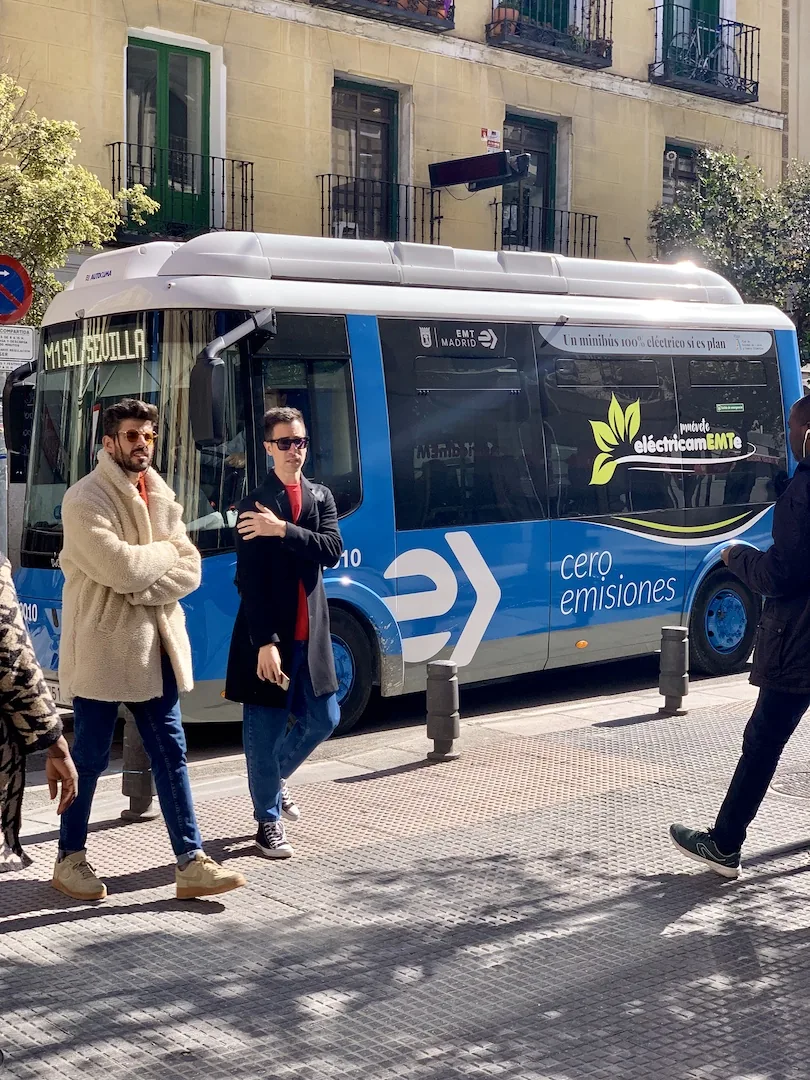
1,300 manually annotated 512x512 photographs of sesame fields and the weeds growing among them, with YOLO-format bounding boxes. Small, but one of the few openly licensed crop-versus-weed detection sets.
Building object detection for precision farming, evaluating methods that distinguish crops from weeds, and developing in-field crop monitoring.
Source: innovatiana.com
Mobile UI Design
- Size
- Approximately 7,846 annotated images, 1.16 GB, Parquet format
- Licence
- Apache 2.0
About 7,846 annotated mobile interface screenshots in 1.16 GB of Parquet, with bounding boxes marking the position and class of UI elements such as text, images and groups. Mobile-specific rather than desktop or web.
Training object detection for mobile UI, automatically recognising interface elements such as text and images, and improving AI-assisted UI design tools.
Source: innovatiana.com
Ships in Aerial Images
- Size
- 26,900 annotated images with enclosing boxes in YOLO format
- Licence
- CC BY-SA 4.0
26,900 aerial images annotated with YOLO-format bounding boxes around ships. Far larger than the satellite-chip equivalents and detector-ready, making it the stronger choice for production maritime surveillance models.
Training ship detection in aerial imagery, maritime surveillance for safety and fisheries, and defence, anti-piracy and border control applications.
Source: innovatiana.com
How this list was put together
Found by searching Dataset Finder for datasets whose documentation describes the task, then checked by hand. A keyword match is not a fit — the first pass picked up a coral survey for the depth-estimation list because it was recorded below fifty metres — so every entry was read against what this page covers, and the ones that matched a word without matching the task were removed.
Sizes and licences come from each dataset's own documentation, vague wording included. Where we found a re-upload or catalogue card stating a licence that the original release contradicts — a CC0 tag on Flickr photographs, MIT on data whose terms require a signed agreement — the entry gives the original terms and says so. The comparison table abbreviates licences; hover a cell for the full wording.