ASR datasets are plentiful, and whether one transfers to your application depends on properties that are rarely in the headline description.
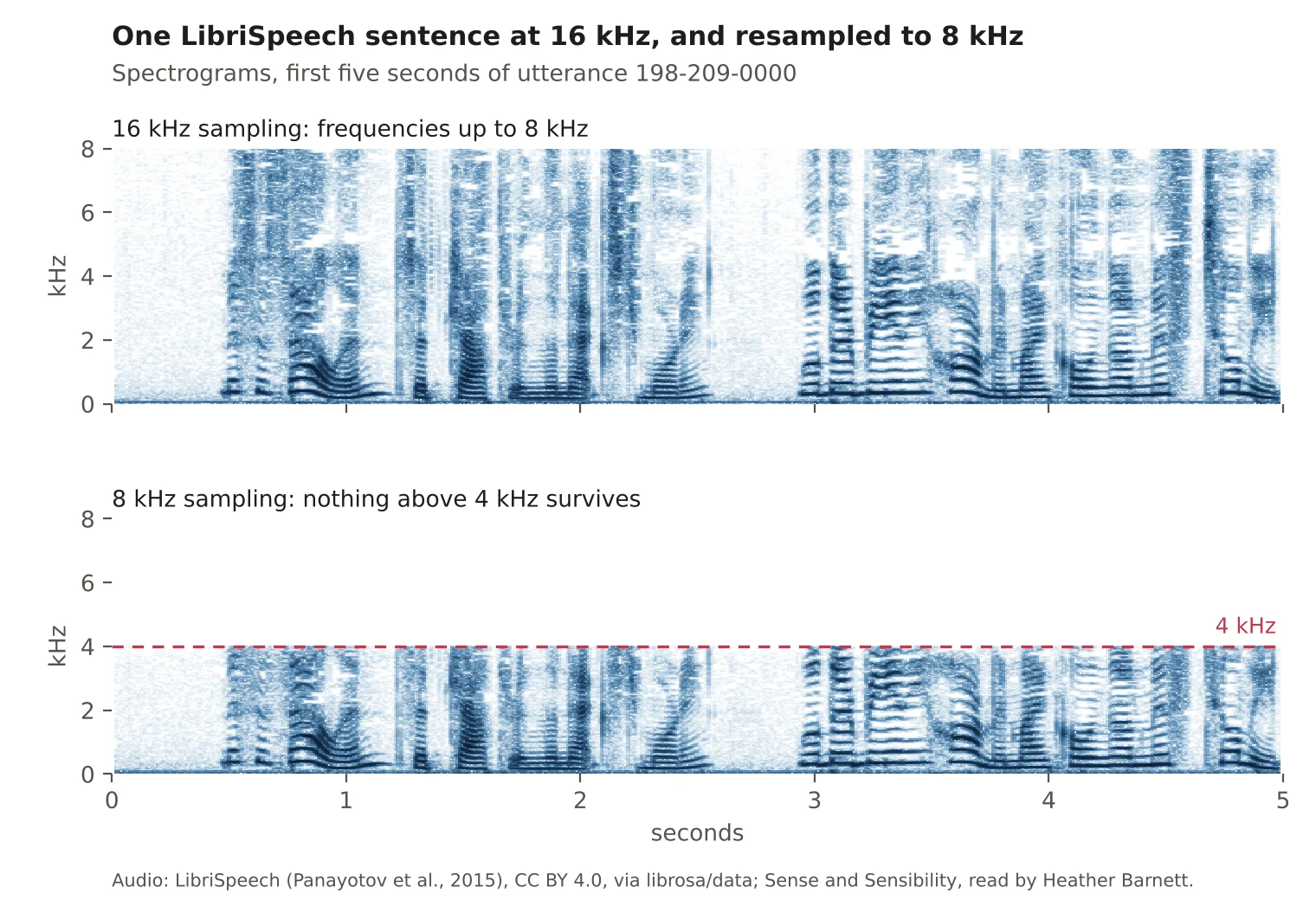
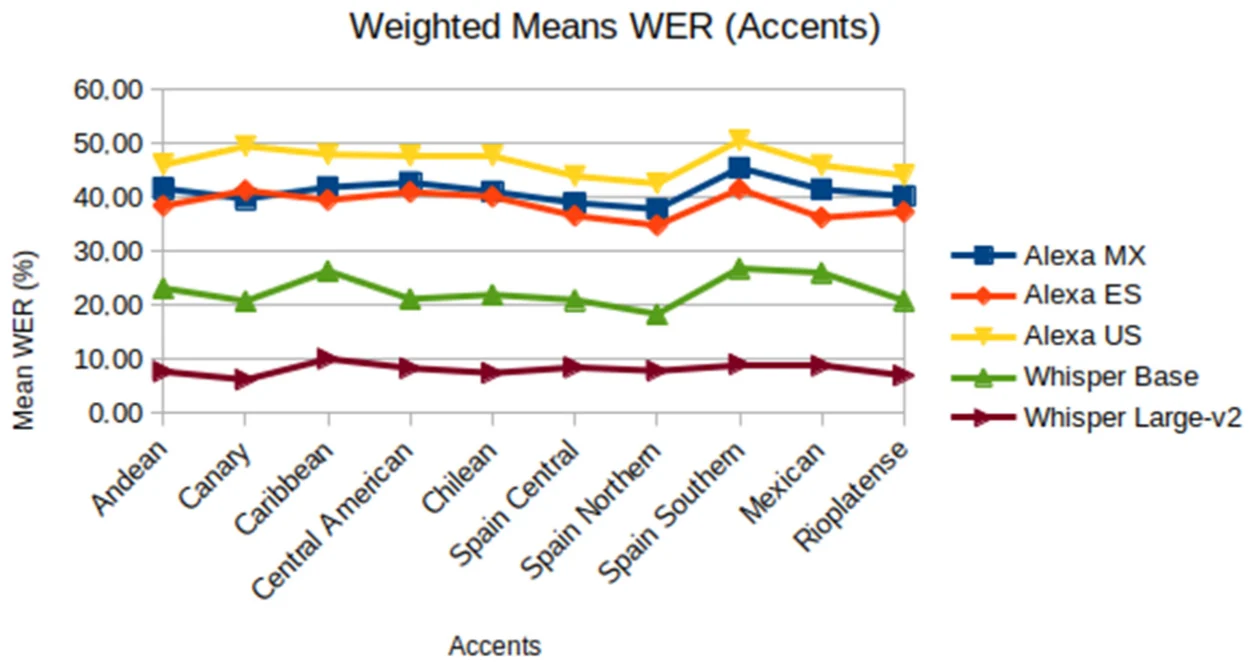
Four things to check before the hour count. Sampling rate, because a model trained at one rate degrades on another and telephone audio is narrowband. Recording conditions, because studio speech does not prepare a model for a noisy room or a car. Accent and dialect coverage, which in most corpora is narrower than the total hours imply. And transcription convention — whether disfluencies, numbers and punctuation are transcribed verbatim or normalised, which directly determines what your model outputs.
Read the recording setup section of the documentation. In this category it predicts deployed accuracy better than dataset size does, and it is the section most people skip.
| Dataset | Modality | Size | Licence | Best for |
|---|---|---|---|---|
| Common Voice - Audio corpus for speech recognition | Audio | 42,600 hours | CC0 | Robust ASR on diverse voice data |
| Medical Speech Transcription and Intent Dataset | Multimodal | 8 hours | Unclear — see below | Medical speech recognition |
| OpenSLR Speech Corpus | Audio | 3.3 GB recordings | CC BY-SA 4.0 | Speech recognition for low-resource languages |
| GigaSpeech | Audio | 10,000 hours | Research only | Large-scale English ASR |
| TED-LIUM Dataset | Audio | 452 hours | CC BY-NC-ND 3.0 | Automatic transcription models |
| TIMIT Dataset | Audio | 6,300 sentences | Research only | Phonetic and acoustic recognition |
| Google Speech Commands | Audio | 105,000 files | CC BY 4.0 | Lightweight keyword recognition |
Common Voice - Audio corpus for speech recognition
- Size
- About 42,600 recorded hours (29,300 validated) of MP3 clips with TSV metadata, 295 languages, as of release 27.0 (data to September 2026)
- Licence
- CC0: Public Domain
A crowdsourced multilingual collection of spoken clips in MP3 with accompanying TSV metadata, each paired with its written text: about 42,600 recorded and 29,300 validated hours across 295 languages in release 27.0, now downloaded through the Mozilla Data Collective. Mozilla's contributor model gives it unusual demographic and accent breadth, and it is released into the public domain.
Training robust ASR on diverse voice data, evaluating speech recognition by demographic and linguistic criteria, and fine-tuning on specific voices or languages.
Source: innovatiana.com
Medical Speech Transcription and Intent Dataset
- Size
- Over 8 hours of audio in WAV files, with associated transcripts in CSV and text format.
- Licence
- Terms not specified on the catalogue page beyond a pointer to Figure Eight (now Appen); check them before use
More than eight hours of WAV audio in which speakers describe common medical symptoms, paired with transcripts in CSV and plain text. Intent labels accompany the utterances, bridging speech recognition and clinical intent detection.
Training medical speech recognition, detecting symptoms and intent expressed aloud, and building health-specialised voice assistants.
Source: innovatiana.com
OpenSLR Speech Corpus
- Size
- About 3.3 GB (compressed) of transcribed WAV recordings with TSV index tables; multi-speaker; 4 languages (af, st, tn, xh)
- Licence
- CC BY-SA 4.0 (Creative Commons Attribution-ShareAlike 4.0)
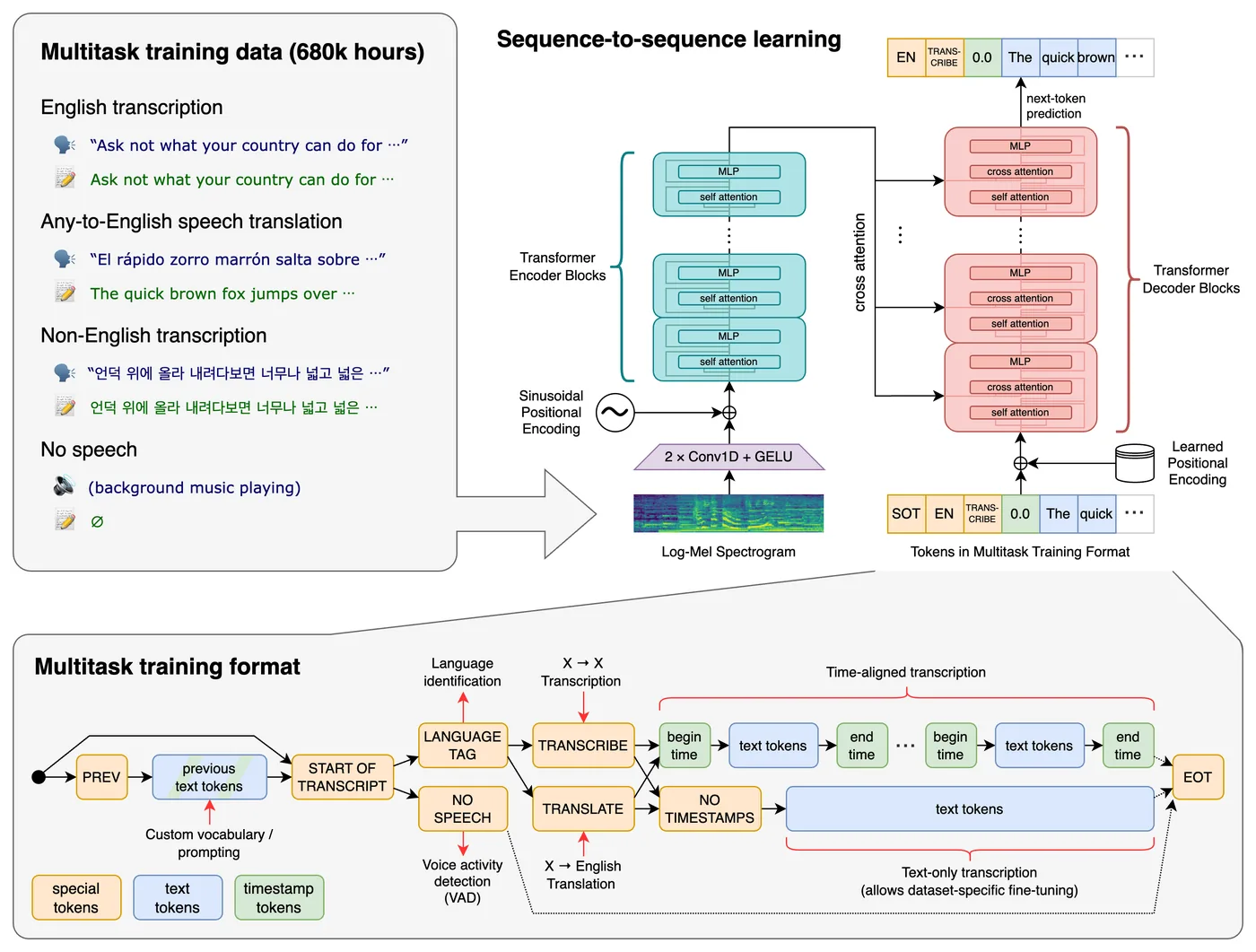
Transcribed WAV recordings with TSV index tables, from multiple speakers across four South African languages: Afrikaans, Sesotho, Setswana and Xhosa. OpenSLR publishes it as text-to-speech data (SLR32), so expect clean, consistent read speech rather than the varied conditions recognition needs; it is one of the few openly licensed resources for these low-resource languages.
Training speech recognition for low-resource languages, developing multilingual TTS systems, and validating multilingual audio pipelines.
Source: innovatiana.com
GigaSpeech
- Size
- Up to 10,000 hours of transcribed audio, WAV/opus files, various audio segments
- Licence
- Apache 2.0 for metadata and code; the audio is gated and for non-commercial research and education only
Up to 10,000 hours of transcribed English speech in WAV and Opus, drawn from audiobooks, podcasts and YouTube. The mix of read and spontaneous speech across many topics makes it broader than audiobook-only corpora. Access is gated: SpeechColab does not own the audio copyright, so the audio is for non-commercial research and education only.
Training large-scale English ASR, building text-to-speech systems from varied audio, and evaluating models across topics and speaking styles.
Source: innovatiana.com
TED-LIUM Dataset
- Size
- 452 hours (release 3), NIST SPHERE audio with STM transcripts
- Licence
- CC BY-NC-ND 3.0 (non-commercial, no derivatives); talks and text remain the property of TED Conferences LLC
452 hours of TED talk recordings in release 3, as NIST SPHERE (.sph) audio with segment-aligned STM transcripts. The prepared-but-spoken register sits between audiobook reading and conversation; the licence is non-commercial and no-derivatives, and the talks remain TED's property.
Training automatic transcription models, generating multilingual subtitles, analysing spoken language style, and studying prosody and discourse markers.
Source: innovatiana.com
TIMIT Dataset
- Size
- 6,300 recorded sentences, WAV (audio) and TXT (phonetic annotations) formats
- Licence
- Available under a specific license from the LDC (Linguistic Data Consortium), mainly for academic use
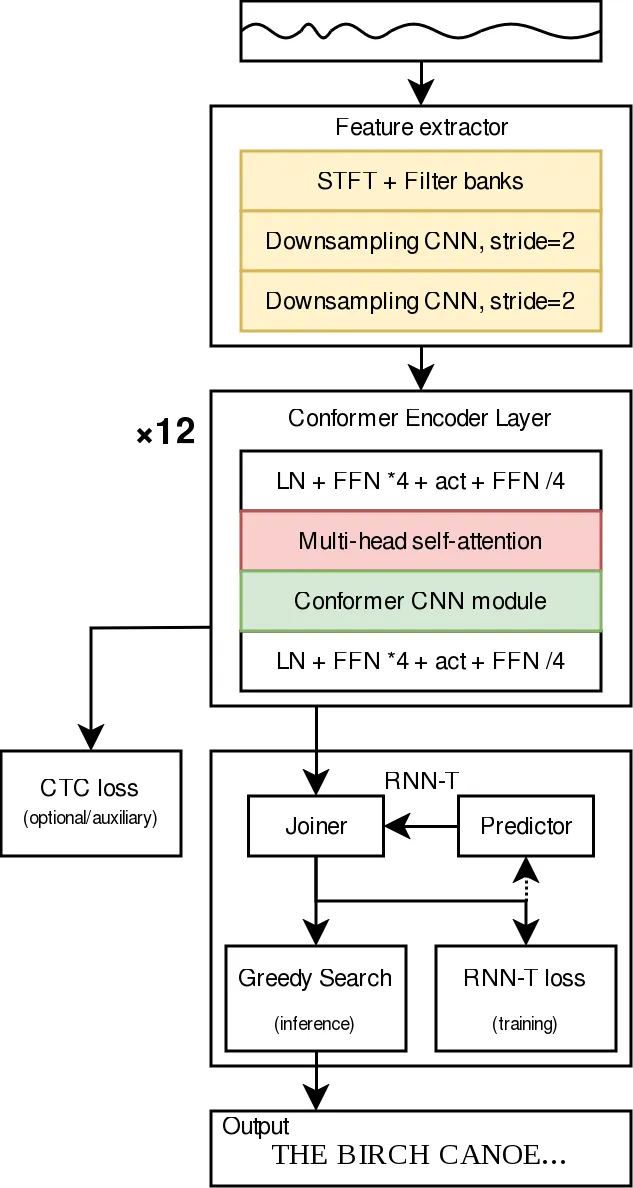
6,300 recorded American English sentences in WAV with detailed TXT phonetic annotations covering dialect variation. The phonetic transcription depth is its value; access goes through the Linguistic Data Consortium and is mainly academic.
Training phonetic and acoustic recognition, analysing American dialects, improving ASR, and studying regional pronunciation differences.
Source: innovatiana.com
Google Speech Commands
- Size
- Approximately 105,000 audio files, WAV format
- Licence
- CC BY 4.0
About 105,000 one-second WAV clips of spoken keywords recorded by many speakers, built for low-latency on-device keyword spotting. The short uniform clips make it the standard benchmark for wake-word and voice-command models.
Training lightweight keyword recognition, developing voice interfaces for IoT and home automation, and analysing short audio signals.
Source: innovatiana.com
How this list was put together
Found by searching Dataset Finder for datasets whose documentation describes the task, then checked by hand. A keyword match is not a fit — the first pass picked up a coral survey for the depth-estimation list because it was recorded below fifty metres — so every entry was read against what this page covers, and the ones that matched a word without matching the task were removed.
Sizes and licences come from each dataset's own documentation, vague wording included. Where we found a re-upload or catalogue card stating a licence that the original release contradicts — a CC0 tag on Flickr photographs, MIT on data whose terms require a signed agreement — the entry gives the original terms and says so. The comparison table abbreviates licences; hover a cell for the full wording.