Agricultural vision has a well-documented reality gap: the best-known datasets photograph single leaves on plain backgrounds, and models trained on them disappoint in a real field.
PlantVillage is the canonical example. It is an excellent benchmark and a poor proxy for field conditions, which is why Open Sprayer Images is in this list as a corrective.
Seven of the nine are labelled public domain or CC BY. Two to check before building a product are PlantVillage, which is CC BY-SA 3.0 and so share-alike, and CropNet, which is CC BY-NC 4.0 and so non-commercial. The Plant Diseases Training Dataset contains PlantVillage, so its CC0 label does not clear it either; nor may Tomato Leaf Disease's, whose ten classes match PlantVillage's tomato folders.
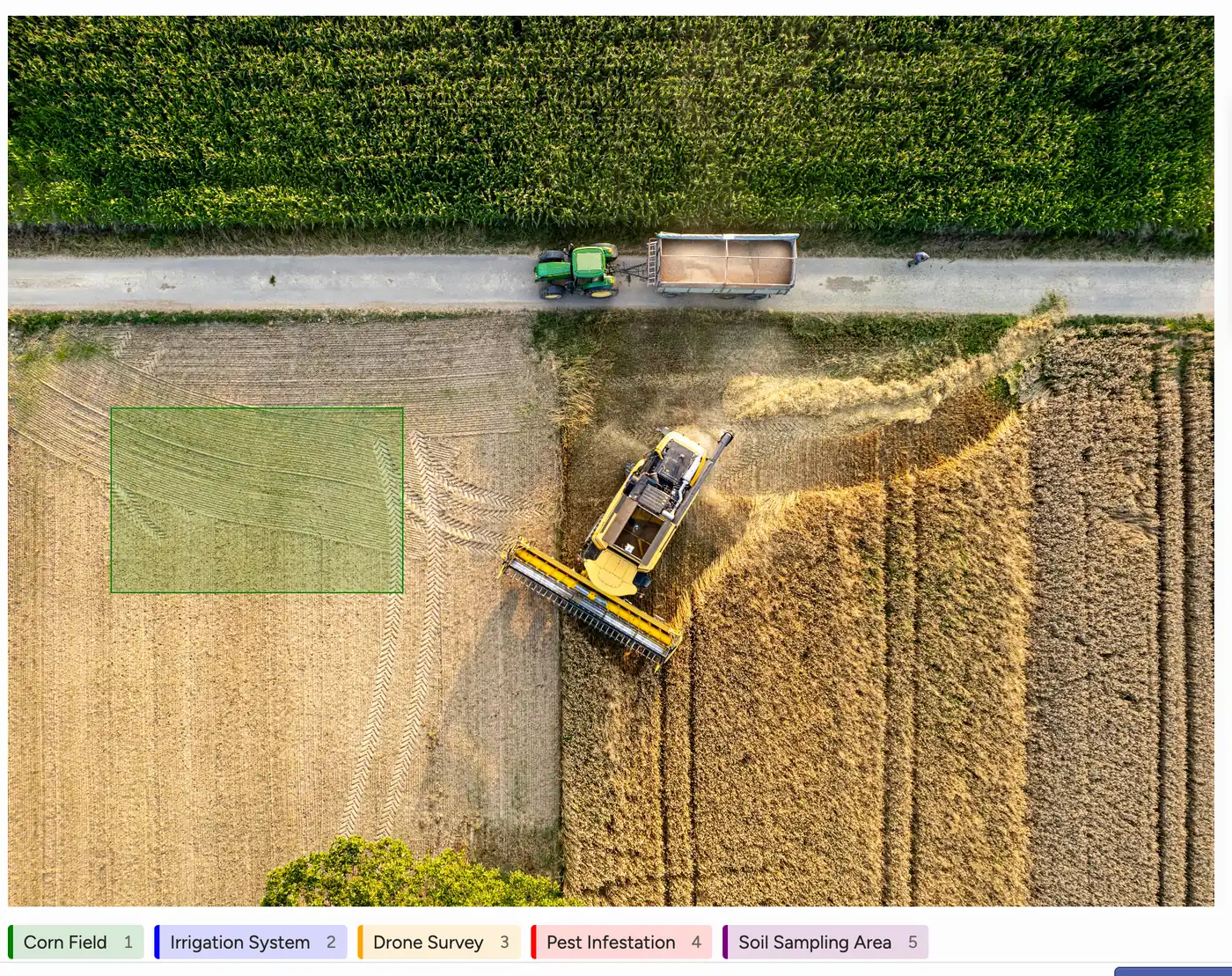
| Dataset | Modality | Size | Licence | Best for |
|---|---|---|---|---|
| PlantVillage | Image | ~54,000 images | CC BY-SA 3.0 | Leaf disease |
| Plant Diseases Training Dataset | Image | 116,000 images | Mixed — see below | Scale |
| Tomato Leaf Disease | Image | ~11,000 images | Unclear — see below | Single-crop depth |
| Crop and Weed Detection | Image | 1,300 images | CC0 | Precision spraying |
| 140 Most Popular Crops | Image | 104,000 files | CC0 | Species ID |
| Open Sprayer Images | Image | ~6,700 images | CC0 | Field conditions |
| CropNet | Multimodal | 2,291 counties · 2017–2022 | CC BY-NC 4.0 | Yield forecasting |
| DeepFruit | Image | 21,122 images | CC BY 4.0 | Fruit recognition |
| Cattle Weight Detection 12k | Image | ~27,000 files · 47.85 GB | CC BY 4.0 | Livestock |
PlantVillage
- Size
- ~54,000 images
- Licence
- CC BY-SA 3.0
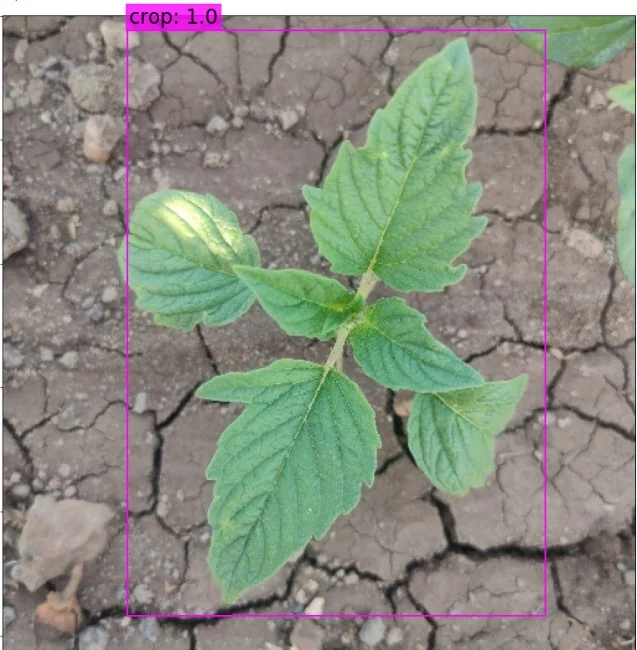
Around 54,000 JPEGs of crop leaves labelled by species and disease. The reference dataset for plant pathology, with one well-documented caveat: most images are single leaves on a plain background, so field performance is usually well below reported accuracy.
Leaf disease classification — and a lesson in the gap between a clean benchmark and a muddy field.
Source: innovatiana.com/datasets
Plant Diseases Training Dataset
- Size
- 116,000 images
- Licence
- CC0 label; contains PlantVillage (CC BY-SA 3.0)
116,000 JPEGs classified by plant type and disease, labelled CC0. It merges several sources, PlantVillage among them with 54,303 of the images, so PlantVillage's CC BY-SA 3.0 share-alike terms come with it whatever the CC0 label says; check every source's terms before the model goes into a product.
Large-scale plant disease classification, once the merged sources' terms have been checked.
Source: innovatiana.com/datasets
Tomato Leaf Disease
- Size
- ~11,000 images
- Licence
- CC0 label (source not stated)
Around 11,000 images of tomato leaves in ten classes named exactly as PlantVillage's tomato folders; the uploader names no source, so if they are PlantVillage images its CC BY-SA 3.0 terms apply despite the CC0 label. Narrow by design: one crop, many conditions, which usually beats a broad multi-crop set when you only need to serve one grower.
Single-crop disease classification where depth matters more than breadth.
Source: innovatiana.com/datasets
Crop and Weed Detection
- Size
- 1,300 images
- Licence
- CC0 1.0
1,300 images at 512×512 with YOLO-format bounding boxes separating crop from weed. Small, but it is the exact task behind precision herbicide application — and the economics only work if the false-positive rate on crop is near zero.
Real-time crop-versus-weed detection on spraying equipment.
Source: innovatiana.com/datasets
140 Most Popular Crops
- Size
- ~104,000 files (~34,750 images × 3 colour formats)
- Licence
- CC0 1.0
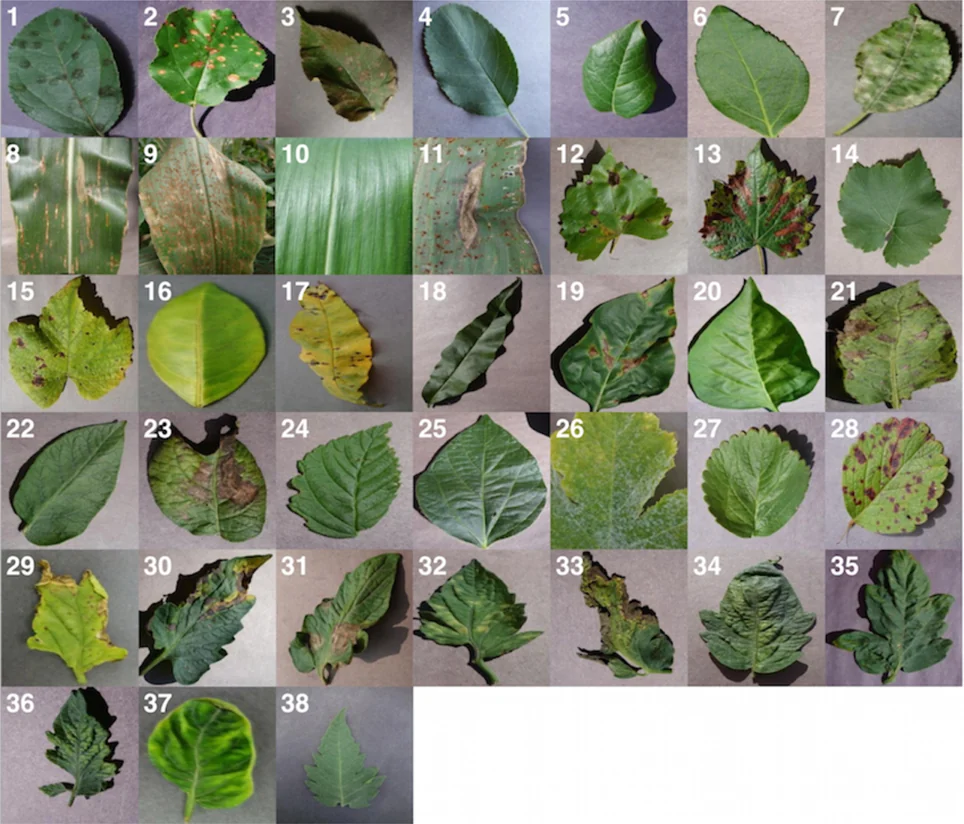
Roughly 104,000 files at 224×224: about 34,750 images, each stored in RGB, BGR and greyscale, covering 139 crop classes despite the name. The 224×224 sizing is deliberate — it drops straight into a standard ImageNet-pretrained backbone with no resizing.
Crop species identification, and transfer learning from a standard vision backbone.
Source: innovatiana.com/datasets
Open Sprayer Images
- Size
- ~6,700 images
- Licence
- CC0 1.0
Around 6,700 high-resolution field photographs, labelled only for whether they show broad-leaved dock, a common weed. Unlike the lab-style leaf datasets, these are messy — variable light, soil, occlusion — which makes them a useful reality check.
A field-conditions weed classifier (broad-leaved dock or not), and a check on how far field photographs are from lab leaf images.
Source: innovatiana.com/datasets
CropNet
- Size
- 2,291 counties · 2017–2022
- Licence
- CC BY-NC 4.0
Multimodal agricultural data covering 2,291 US counties over six years, combining satellite imagery, weather and tabular farm data. The combination is the point: yield is not predictable from imagery alone.
Crop yield forecasting from fused satellite, weather and tabular inputs.
Source: innovatiana.com/datasets
DeepFruit
- Size
- 21,122 images
- Licence
- CC BY 4.0
21,122 JPEGs of 20 fruit types photographed in 8 combination sets, split 16,899 train and 4,223 test, with CSV annotations. Built for fruit recognition and calorie estimation — a dietary-assessment set rather than orchard imagery, so it will not prepare a model for field harvesting.
Fruit recognition and calorie estimation from photos of mixed fruit.
Source: innovatiana.com/datasets
Cattle Weight Detection 12k
- Size
- ~27,000 files · 47.85 GB
- Licence
- CC BY 4.0
Around 27,000 annotated files totalling 47.85 GB by the catalogue's count, for estimating cattle weight from imagery; the name says 12k, so confirm the image count on the source page. Regression from pixels to a continuous physical quantity, which is a different problem from the classification tasks that dominate this category.
Non-contact livestock weight estimation — visual regression rather than classification.
Source: innovatiana.com/datasets
How this list was put together
Each dataset is listed in Innovatiana's open-dataset catalogue and links to its page, where the published licence and size appear in full.
Where a dataset mixes modalities — CropNet combines satellite, weather and tabular data — the chip reflects the combination rather than any single one.