Classification is the cheapest vision task to label and the right place to start: if a classifier cannot separate your classes, no more complex architecture will.
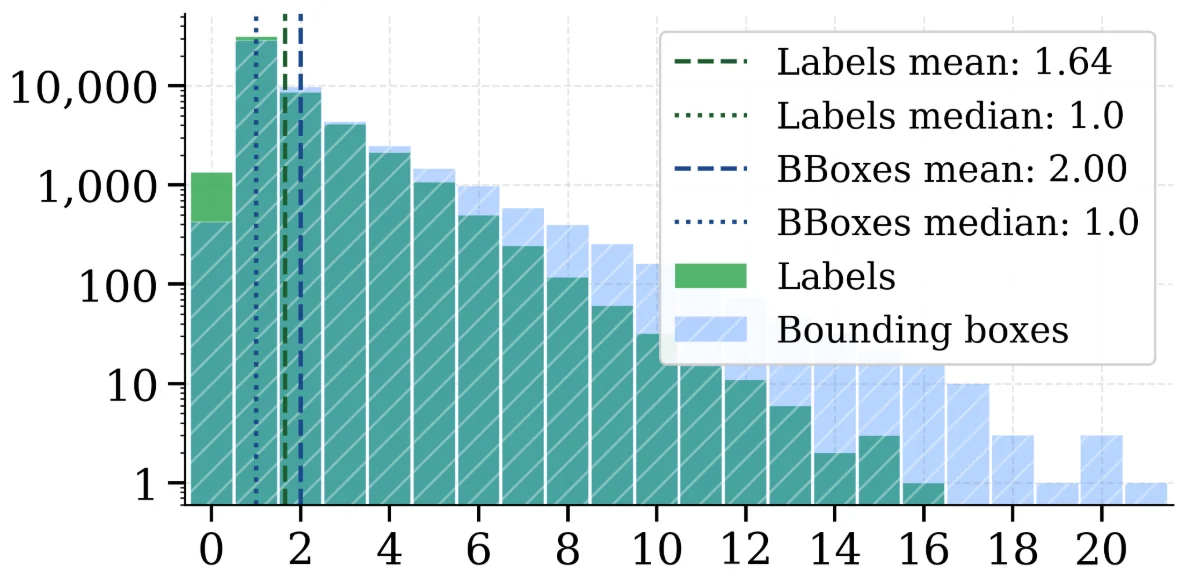
The useful split in this category is single-label versus multi-label. Single-label assumes exactly one correct class per image, which suits species identification or defect type. Multi-label allows several, which is what you need when an image can contain more than one thing of interest — and a single-label dataset cannot be used to train a multi-label model without relabelling.
A practical note on this category: classification datasets are the easiest to assemble and therefore the most variable in label quality. A set of a hundred thousand images scraped by search query carries whatever errors the search engine made. Sample fifty images, check the labels yourself, and extrapolate the error rate — it is the cheapest quality audit available anywhere in machine learning.
| Dataset | Modality | Size | Licence | Best for |
|---|---|---|---|---|
| MNIST | Image | 70,000 images | CC BY-SA 3.0 | Image classification |
| ImageNet | Image | 1,281,167 images | Research only | Large-scale image classification |
| Pharmaceutical Drugs and Vitamins Synthetic Images | Image | 20,000 images | CC BY-SA 3.0 | Pill image classification |
| Mammals Image Classification Dataset - 45 Animals | Image | 13,751 images | ODC-By | Animal image classification |
| Vehicle Detection Image Set | Image | 17,760 images | ODbL (source unclear) | Binary vehicle-versus-non-vehicle classification |
| Indoor Scenes CVPR 2019 | Image | 15,620 images | Research only | Image classification for interior applications |
| Playing Cards Classification Dataset | Image | 8,157 images | CC0 (source unclear) | Image classification |
| Eye Diseases Classification | Image | 4,200 images | ODbL | Automatically classifying eye diseases |
| 140 Most Popular Crops Image Dataset | Image | 104,000 images | CC0 | Crop and plant types |
MNIST
- Size
- 70,000 images (60,000 for training, 10,000 for testing), PNG or IDX format
- Licence
- Creative Commons Attribution-Share Alike 3.0 (CC BY-SA 3.0)
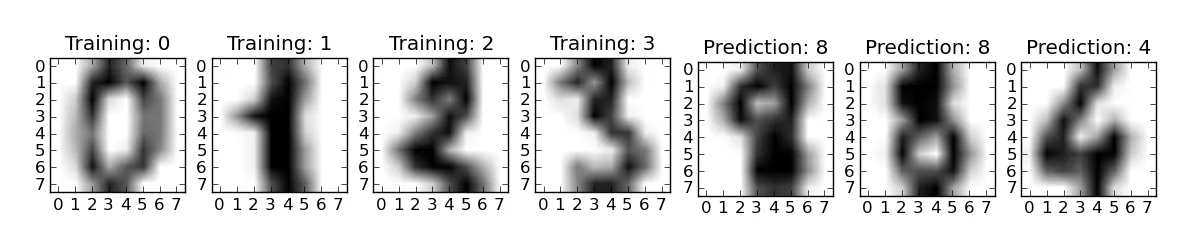
70,000 centred greyscale 28x28 images of handwritten digits labelled zero to nine, split 60,000 train and 10,000 test, in PNG or IDX.
Training image classification, benchmarking CNNs and autoencoders, demonstrating supervised pipelines, and experimenting with dimensionality reduction or GANs.
Source: innovatiana.com
ImageNet
- Size
- 1,281,167 images (training), 50,000 images (validation) and 100,000 images (test), 1,000 object classes
- Licence
- Usable for non-commercial research purposes
1,281,167 training images plus 50,000 validation and 100,000 test images across 1,000 hierarchically organised object classes. The dataset that defined modern image classification, but restricted to non-commercial research use.
Training large-scale image classification, comparing CNN and Transformer architectures, transfer learning, and academic benchmarking of visual recognition.
Source: innovatiana.com
Pharmaceutical Drugs and Vitamins Synthetic Images
- Size
- 20,000 JPEG images, 10 classes, COCO annotations, approx. 256 MB
- Licence
- CC BY-SA 3.0
Roughly 20,000 computer-generated JPEG images of pills and supplements sold in the Philippines, grouped into 10 labelled categories with COCO annotations, about 256 MB. Synthetic, so labels are exact.
Training pill image classification, testing detection algorithms on synthetic data before real use, and creating educational applications about medication.
Source: innovatiana.com
Mammals Image Classification Dataset - 45 Animals
- Size
- 13,751 JPG images, 256x256 pixel resolution, 45 classes
- Licence
- ODC Attribution License (ODC-by)
13,751 JPG mammal images at a uniform 256x256 resolution, sorted into 45 species classes with one folder per class. Uniform sizing and a high class count make it a decent fine-grained classification exercise.
Training animal image classification, developing automatic species recognition systems, and testing CNN architectures on varied animal images.
Source: innovatiana.com
Vehicle Detection Image Set
- Size
- 17,760 JPEG images, two classes (vehicles/non-vehicles)
- Licence
- Labelled ODbL by the uploader; the image source is not stated
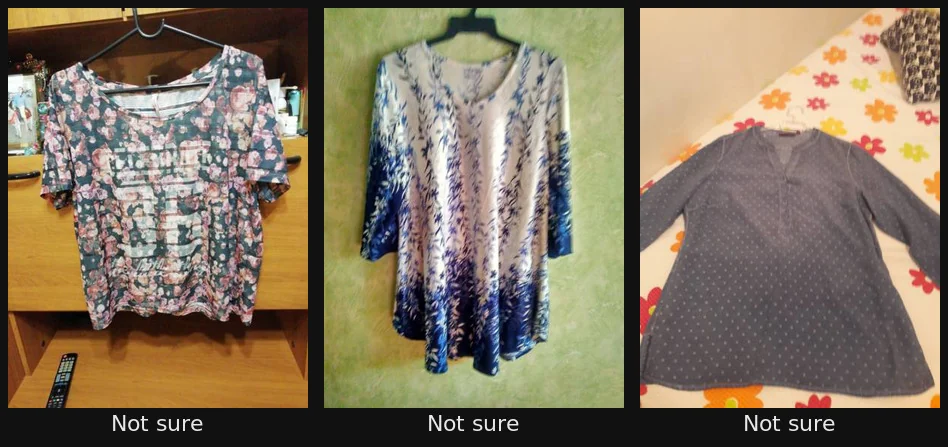
17,760 labelled JPEG photographs sorted into vehicle and non-vehicle classes. Classification rather than detection despite the name, and well sized for binary classifier training or sliding-window pipelines. The uploader names no source; Udacity's similar vehicle/non-vehicle set was built from the GTI database and KITTI, which is CC BY-NC-SA 3.0, so check provenance before commercial use.
Training binary vehicle-versus-non-vehicle classification, testing detection algorithms across visual conditions, and prototyping road surveillance or smart parking.
Source: innovatiana.com
Indoor Scenes CVPR 2019
- Size
- Approximately 15,620 JPG images divided into 67 categories
- Licence
- Research use only (original MIT Indoor-67 page); this mirror labels it ODbL
Roughly 15,620 labelled JPG photographs of indoor scenes across 67 categories, including libraries, corridors, kitchens and hotel rooms. This is MIT Indoor-67 (Quattoni and Torralba, CVPR 2009), whatever the mirror's title says, and the original page restricts the images to research use. Indoor scene classification is notoriously harder than outdoor, which is the point.
Training image classification for interior applications, testing CNN robustness on complex scenes, and developing navigation or detection for robots and embedded systems.
Source: innovatiana.com
Playing Cards Classification Dataset
- Size
- 8,157 JPEG images (224×224), 53 classes
- Licence
- CC0 as uploaded; the image source is not stated
8,157 clean, well-centred JPEG images at 224x224 across 53 classes, one per standard playing card plus the joker. Uniform framing and sizing make it an easy, reliable fine-grained classification exercise.
Training image classification such as CNNs or MobileNet, creating card recognition for automated games, and beginner computer vision teaching projects.
Source: innovatiana.com
Eye Diseases Classification
- Size
- Approximately 4,200 retinal images, JPEG or PNG depending on source
- Licence
- Open Database License (ODbL) with attribution to original authors
About 4,200 retinal photographs in JPEG or PNG, labelled as normal, diabetic retinopathy, cataract or glaucoma. Four balanced classes make it a convenient multi-class ophthalmology benchmark, under ODbL with attribution to the original authors.
Automatically classifying eye diseases, building ophthalmology diagnostic tools, and medical imaging computer vision research.
Source: innovatiana.com
140 Most Popular Crops Image Dataset
- Size
- ~104,000 RGB, BGR and greyscale images, 224x224 pixel resolution
- Licence
- CC0: Public Domain
Around 104,000 crop photographs at 224x224 across 139 agricultural classes, provided in RGB, BGR and greyscale variants. The multi-channel duplication supports experiments on colour-space sensitivity as well as plain classification.
Recognising and classifying crop and plant types, building precision agriculture monitoring tools, and testing multi-format multi-channel vision approaches.
Source: innovatiana.com
How this list was put together
Found by searching Dataset Finder for datasets whose documentation describes the task, then checked by hand. A keyword match is not a fit — the first pass picked up a coral survey for the depth-estimation list because it was recorded below fifty metres — so every entry was read against what this page covers, and the ones that matched a word without matching the task were removed.
Sizes and licences come from each dataset's own documentation, vague wording included. Where we found a re-upload or catalogue card stating a licence that the original release contradicts — a CC0 tag on Flickr photographs, MIT on data whose terms require a signed agreement — the entry gives the original terms and says so. The comparison table abbreviates licences; hover a cell for the full wording.