Pose estimation predicts the positions of named keypoints, and the keypoint definitions differ between datasets in ways that make combining them harder than it looks.
Every pose dataset defines its own skeleton: how many keypoints, where exactly on the body they sit, and how they connect. Seventeen-point and twenty-five-point human skeletons are both common and are not interchangeable, so merging two datasets requires mapping one skeleton onto the other and discarding or interpolating the difference.
The second thing to check is whether annotations are 2D or 3D, and if 3D, how they were obtained. Motion-capture-derived 3D keypoints are accurate and come from studio conditions that look nothing like deployment footage. Annotations lifted from single images are in-the-wild but less precise. Which trade-off suits you depends entirely on where your model will run.
| Dataset | Modality | Size | Licence | Best for |
|---|---|---|---|---|
| Tennis Player Actions Dataset | Image | 2,004 images | CC BY 4.0 (source unclear) | Recognition of sports actions |
| YouTube Faces with Facial Keypoints | Video | 2,200 videos | Unclear — see below | Facial recognition from real uncontrolled video |
| HaGrid - Hand Gesture Recognition Image Dataset | Image | 552,992 images | CC BY-SA 4.0 variant | Gesture recognition for video calling |
| COCO Dataset: Common Objects in Context | Image | 330,000 images | Mixed — see below | Object recognition |
| Lumbar Coordinate Pretraining Dataset | Medical | 2,477 images | CC BY 4.0 | Lumbar degenerative classification models |
Tennis Player Actions Dataset
- Size
- 2,004 images + JSON COCO keypoints, 4 classes, ~508 MB
- Licence
- CC BY 4.0 as uploaded by a re-uploader; the original source is not named and the images show identifiable people
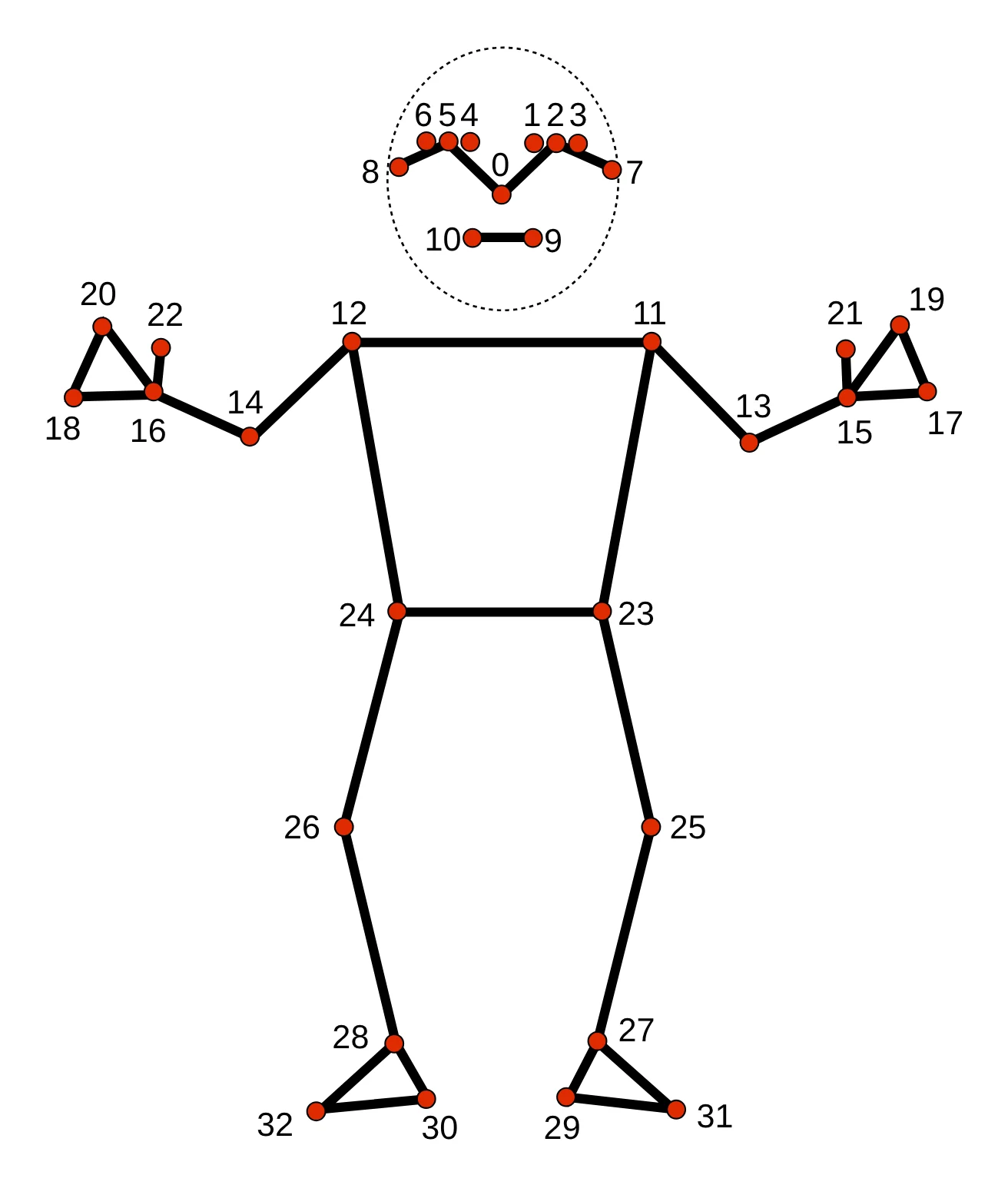
Over 2,000 images of four tennis actions, forehand, backhand, serve and waiting position, about 508 MB, annotated in COCO JSON format with 18 OpenPose body keypoints per figure. Pose keypoints rather than boxes alone.
Training recognition of sports actions from still images, analysing body movement via fine keypoint annotation, and developing coaching or automatic scoring assistants.
Source: innovatiana.com
YouTube Faces with Facial Keypoints
- Size
- 2,200 annotated videos, 800+ identities, with 2D/3D facial keypoint files
- Licence
- Labelled CC0 by the uploader; the frames are third-party YouTube footage
2,200 annotated short celebrity videos covering more than 800 identities, cropped around the face and limited to 240 frames each, with 2D and 3D facial keypoint files for every frame. The uploader labels it CC0, but the frames are third-party YouTube footage of identifiable people, so check the original YouTube Faces DB terms and biometric-privacy obligations before any use.
Training facial recognition from real uncontrolled video, analysing and predicting facial movement or expression over time, and transfer learning to other facial datasets.
Source: innovatiana.com
HaGrid - Hand Gesture Recognition Image Dataset
- Size
- 552,992 Full HD images annotated in COCO + 21 landmark points, 18 classes
- Licence
- HaGRID licence: the authors' variant of CC BY-SA 4.0 (not a Creative Commons licence)
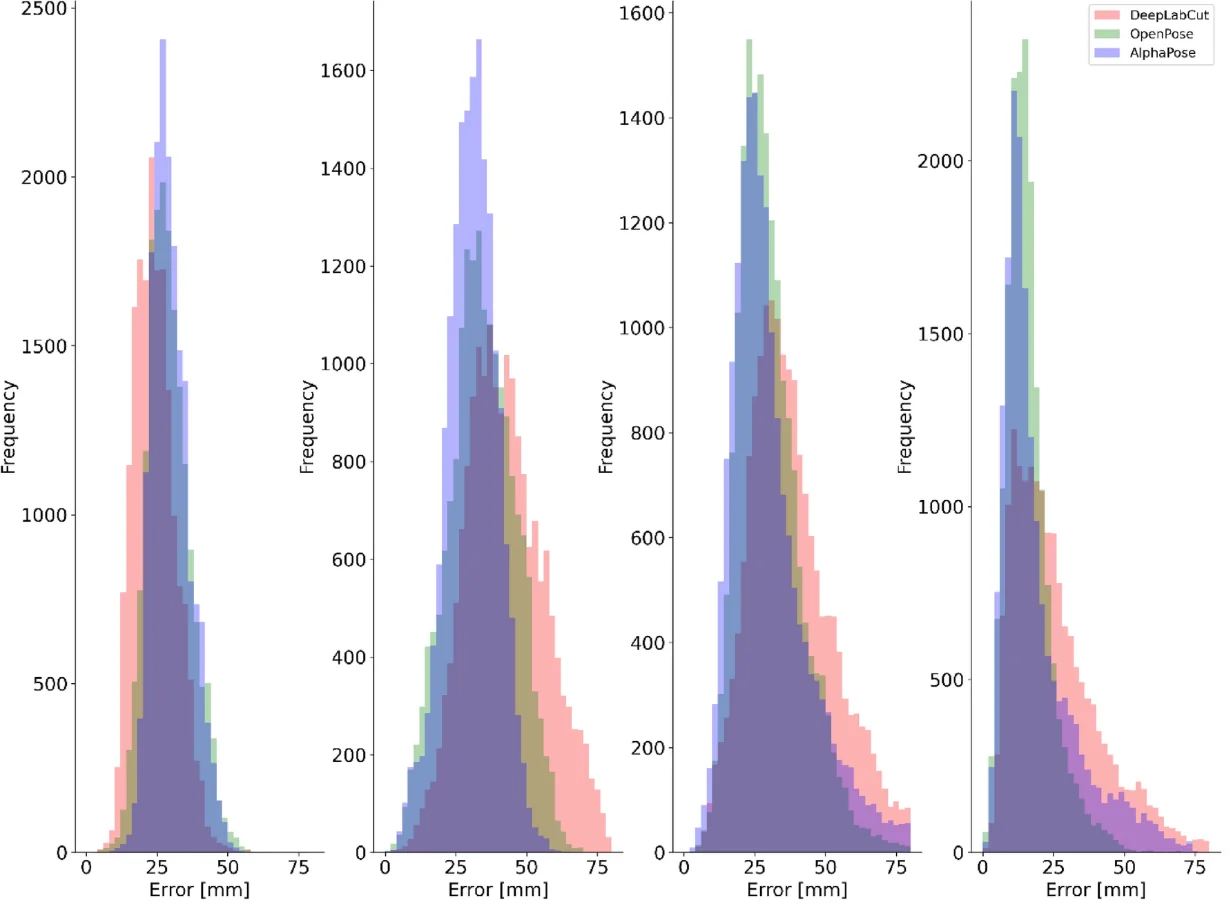
552,992 Full HD images annotated in COCO format with 21 hand landmark points, spanning 18 gesture classes plus a no-gesture class. That is the 2022 release; the current HaGRIDv2 has 1,086,158 images in 33 gesture classes. Both bounding boxes and landmarks are provided, covering detection and pose in one set.
Training gesture recognition for video calling, building gesture-controlled interfaces for vehicles or smart homes, and benchmarking hand detection and tracking.
Source: innovatiana.com
COCO Dataset: Common Objects in Context
- Size
- Approximately 330,000 images in JPEG format, with JSON annotations
- Licence
- Annotations CC BY 4.0; images remain their Flickr owners' copyright under the Flickr Terms of Use
Roughly 330,000 JPEG images with JSON annotations supporting object detection, instance and panoptic segmentation, captioning and human pose. The single most widely used computer vision benchmark. Its annotations are CC BY 4.0, but the images stay under their Flickr owners' copyright and the Flickr Terms of Use, so the annotation licence does not clear commercial use of the images.
Object recognition, image segmentation, automatic image description, understanding complex scenes, and human pose detection.
Source: innovatiana.com
Lumbar Coordinate Pretraining Dataset
- Size
- 2,477 medical images annotated with 5 key points, converted DICOM image format or PNG/JPEG possible
- Licence
- Attribution 4.0 International (CC BY 4.0)
2,477 lumbar-region medical images, each annotated with five vertebral keypoints, available as converted DICOM or as PNG/JPEG. Designed as a pre-training stage for spinal degenerative classification rather than as a standalone benchmark.
Pre-training lumbar degenerative classification models, automatic analysis of vertebral structures, and identifying key anatomical points.
Source: innovatiana.com
How this list was put together
Found by searching Dataset Finder for datasets whose documentation describes the task, then checked by hand. A keyword match is not a fit — the first pass picked up a coral survey for the depth-estimation list because it was recorded below fifty metres — so every entry was read against what this page covers, and the ones that matched a word without matching the task were removed.
Sizes and licences come from each dataset's own documentation, vague wording included. Where we found a re-upload or catalogue card stating a licence that the original release contradicts — a CC0 tag on Flickr photographs, MIT on data whose terms require a signed agreement — the entry gives the original terms and says so. The comparison table abbreviates licences; hover a cell for the full wording.