The core recommendation dataset is an interaction log, and the gap between offline metrics on logs and online performance is the largest of any task in this site's dataset posts.
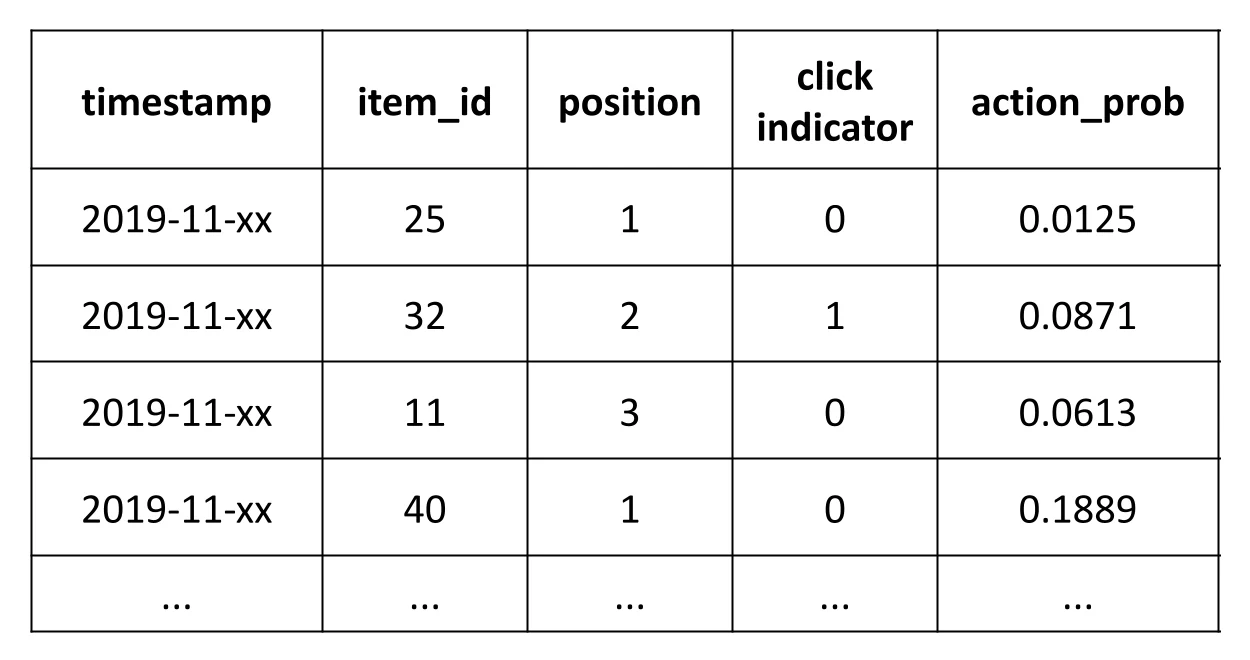
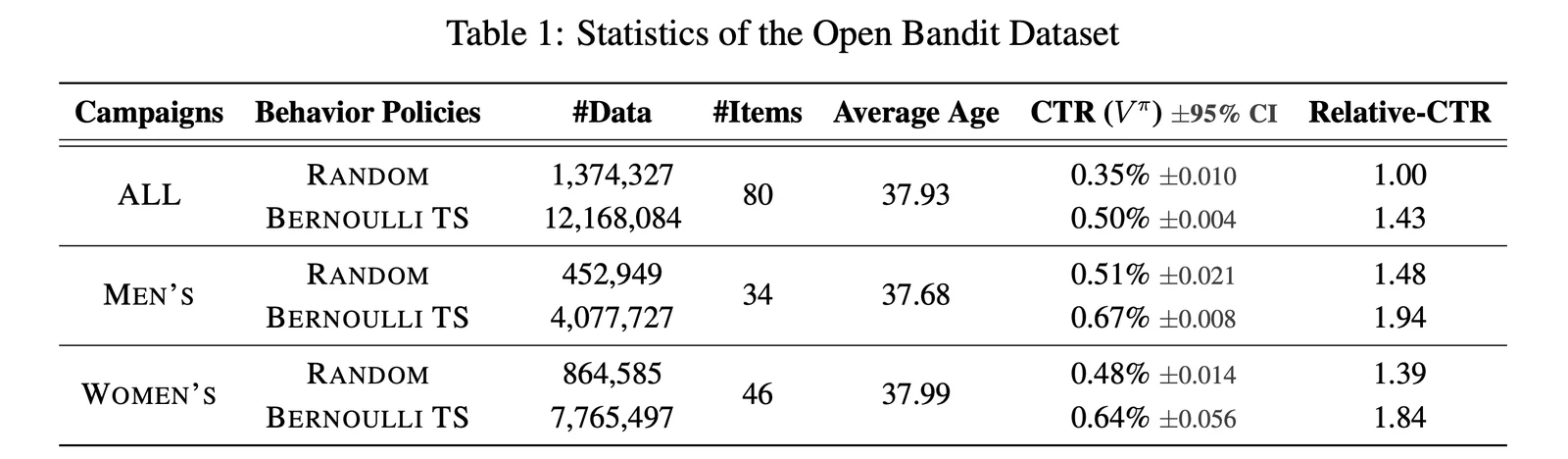
The structural issue is that a log records what happened under the policy that produced it. Users only interacted with items they were shown, so the data is missing not at random, and a model evaluated offline is scored on its ability to predict a biased sample. This is why offline improvements routinely fail to replicate in live tests, and why the field relies on online experimentation.
The other distinction to check is explicit versus implicit feedback. Explicit ratings are sparse and informative; implicit signals like clicks and views are abundant and ambiguous, since not clicking something may mean dislike, or not seeing it. Most production systems use implicit feedback, so a ratings dataset may be the less representative choice despite being cleaner.
What is listed here is review-level feedback and catalogue metadata rather than logged interactions. The review sets give explicit ratings tied to products, which suit rating prediction and the study of fit and preference; the catalogue sets suit content-based and cold-start work, where you recommend from what an item is rather than who used it. None of them records what a user was shown and did not choose, so none of them reproduces the biased-log problem described above. For that you need an interaction log, and the widely used public ones carry research terms — read them before building anything commercial on one.
| Dataset | Modality | Size | Licence | Best for |
|---|---|---|---|---|
| Sephora Skincare Reviews | Text | 1M reviews | CC BY 4.0 | Sentiment analysis of customer opinions |
| Clothing Fit Dataset for Size Recommendation | Text | 82,790 entries | CC BY 4.0 | Customised size recommendation for e-commerce |
| Women's E-Commerce Clothing Reviews | Text | 23,486 rows | CC0 | Sentiment analysis or review classification |
| Netflix Movies and TV Shows 2021 | Tabular | 5,897 rows | Unclear — see below | Recommendation systems |
| Letterbox Movie Classification Dataset | Text | 10,002 movies | CC0 | Content or popularity based film recommendation |
| Steam Games Dataset | Text | 124,000 entries | MIT | Analysing trends and statistics |
| 7K Books with Metadata | Text | 6,542 rows | Unclear — see below | Content-based book recommendation engine |
Sephora Skincare Reviews
- Size
- About 1 million reviews of ~2,000 skincare products, plus metadata for 8,000+ products, CSV/JSON
- Licence
- Attribution 4.0 International (CC BY 4.0)
Roughly one million customer reviews of about 2,000 Sephora skincare products, plus metadata for more than 8,000 products across all categories, in CSV and JSON. Collected in 2023, giving recent beauty-sector language and pricing.
Sentiment analysis of customer opinions on products and brands, building personalised recommendation systems, and analysing ingredient, pricing and popularity trends.
Source: innovatiana.com
Clothing Fit Dataset for Size Recommendation
- Size
- 82,790 ModCloth entries in JSON format (40 MB), structured customer-product data with text (the release also includes RentTheRunway: 192,544 more)
- Licence
- CC BY 4.0
82,790 JSON entries of about 40 MB combining structured customer and product data with written feedback, labelled for whether a size ran true, too small or too large. A genuine tabular-plus-text recommendation problem.
Building customised size recommendation for e-commerce, creating fit classification models from written reviews, and developing summarisation or sentiment models.
Source: innovatiana.com
Women's E-Commerce Clothing Reviews
- Size
- 23,486 rows in CSV format, text and categorical data
- Licence
- CC0: Public Domain
23,486 CSV rows of anonymised online clothing reviews combining free text with ratings, customer ages, recommendation flags and product categories. Compact, clean and a long-standing teaching set for applied NLP.
Training sentiment analysis or review classification, studying customer experience by age or product category, and exploring BERT, TF-IDF or Word2Vec on real data.
Source: innovatiana.com
Netflix Movies and TV Shows 2021
- Size
- 5,897 rows in CSV format, structured columns (title, genre, country, IMDb rating...)
- Licence
- Labelled CC0 by the uploader; catalogue data collected from the Flixable search engine
5,897 CSV rows of structured metadata on films and series available on Netflix in 2021, covering type, country, release date, duration, genres and IMDb rating. Small and tabular. The CC0 tag is the uploader's: the catalogue was collected from the Flixable search engine, so it is not a dedication by the rights holders.
Creating recommendation systems based on ratings or genres, analysing Netflix programming by country or year, and exploring cultural preferences through availability.
Source: innovatiana.com
Letterbox Movie Classification Dataset
- Size
- 10,002 movies, CSV file with 15 columns (texts, categories, numeric)
- Licence
- CC0: Public Domain
Metadata for 10,002 films in a 15-column CSV mixing text, categorical and numeric fields, covering genres, directors, duration, language and engagement metrics, plus text descriptions suitable for NLP.
Creating content or popularity based film recommendation, analysing genre, studio or rating trends over time, and classifying or clustering films by theme or user behaviour.
Source: innovatiana.com
Steam Games Dataset
- Size
- About 124,000 entries in Parquet format (83,560 when first catalogued)
- Licence
- MIT
About 124,000 Parquet entries of metadata on PC games published on Steam, gathered from the Steam API and Steam Spy with DLC and extra content excluded.
Analysing trends and statistics in the video game industry, developing game recommendation systems, and studying popularity, genres and life cycles of PC games.
Source: innovatiana.com
7K Books with Metadata
- Size
- 6,542 rows in CSV format, containing titles, authors, descriptions, ISBNs, language, categories
- Licence
- Labelled CC0 by the uploader; built from the Google Books API and Goodreads, whose terms apply
6,542 CSV rows of book metadata including title, author, description, ISBN, language and categories, sourced through the Google Books API from Goodreads data. Note the actual row count is below the 7K in its name. The book descriptions remain the publishers' copyright and the API data falls under Google Books and Goodreads terms, so the CC0 tag is the uploader's, not the rights holders'.
Creating a content-based book recommendation engine, analysing literary trends by category or description, and NLP experiments in summarisation and semantic clustering.
Source: innovatiana.com
How this list was put together
Found by searching Dataset Finder for datasets whose documentation describes the task, then checked by hand. A keyword match is not a fit — the first pass picked up a coral survey for the depth-estimation list because it was recorded below fifty metres — so every entry was read against what this page covers, and the ones that matched a word without matching the task were removed.
Sizes and licences come from each dataset's own documentation, vague wording included. Where we found a re-upload or catalogue card stating a licence that the original release contradicts — a CC0 tag on Flickr photographs, MIT on data whose terms require a signed agreement — the entry gives the original terms and says so. The comparison table abbreviates licences; hover a cell for the full wording.