Retail data is well supplied in public form and consistently mismatched to any specific business, which makes this a category where domain fine-tuning on your own catalogue matters unusually much.
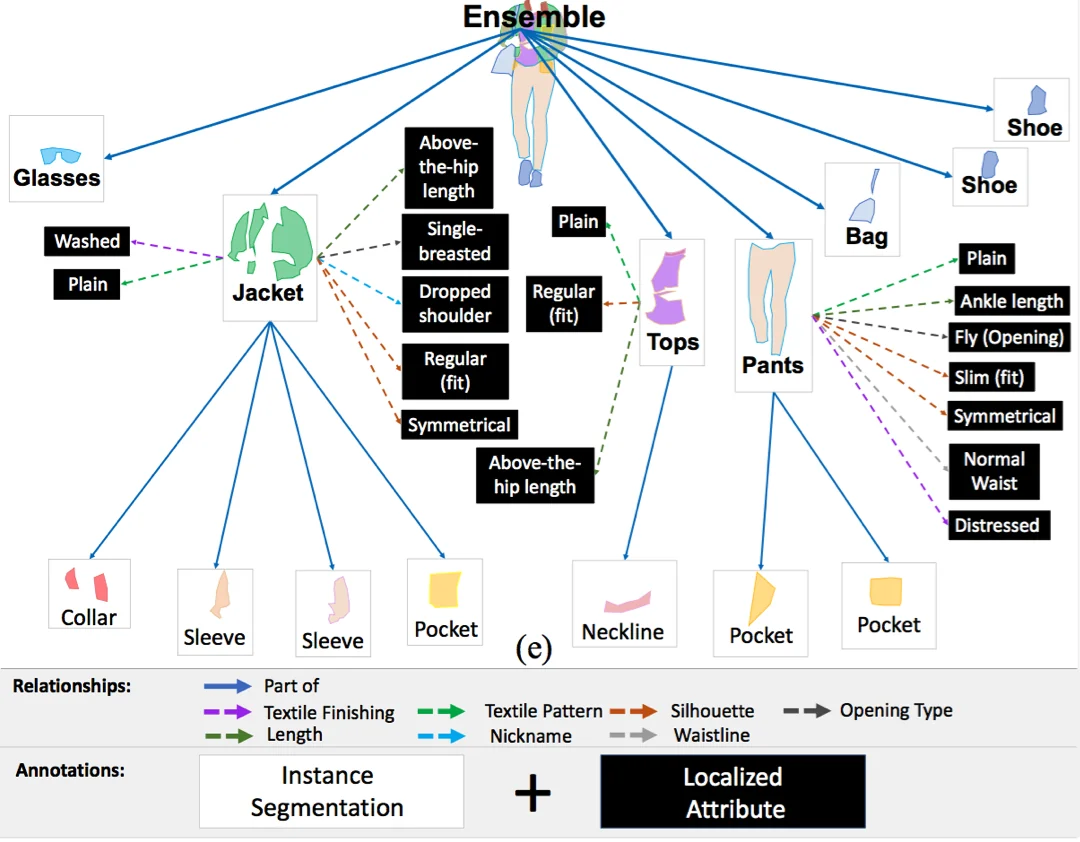
The useful tasks here split into text and vision. Product classification, attribute extraction and review analysis are text problems with well-established public data. Visual search, attribute tagging from images and try-on are vision problems where fashion datasets dominate the public supply — which is convenient if you sell clothes and less so otherwise.
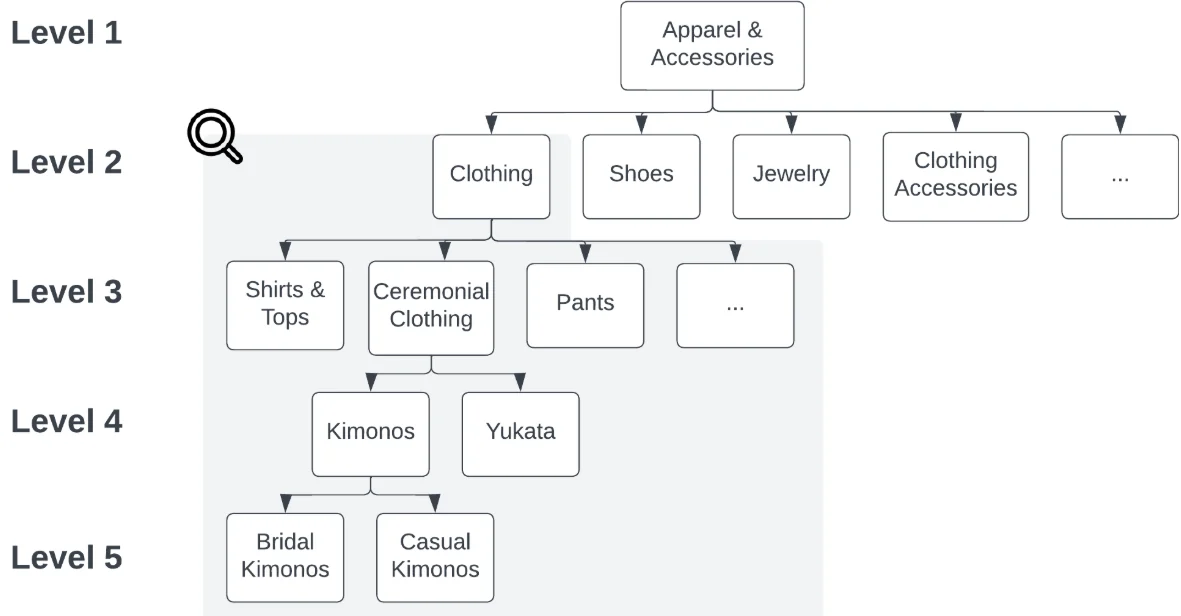
The structural mismatch is category taxonomy. Every retailer's product hierarchy is its own, and a model trained on a public taxonomy produces labels you then have to map, losing precision at every step. For classification and attribute work, a few thousand examples from your own catalogue usually outperform a much larger public set — which is the clearest case in any of these guides for treating public data as a starting point and your own as the actual training set.
| Dataset | Modality | Size | Licence | Best for |
|---|---|---|---|---|
| FreshRetailNet-50k - Food Retail Demand Prediction | Text | 4.85M records | CC BY 4.0 | Demand forecasting in food retail |
| Amazon Polarity | Text | 4M reviews | Apache 2.0 | Sentiment classification for e-commerce |
| Sephora Skincare Reviews | Text | 1M reviews | CC BY 4.0 | Sentiment analysis of customer opinions |
| Clothing Fit Dataset for Size Recommendation | Text | 82,790 entries | CC BY 4.0 | Customised size recommendation for e-commerce |
| E-commerce Text Classification | Text | 50,425 entries | CC BY 4.0 | NLP models to classify products |
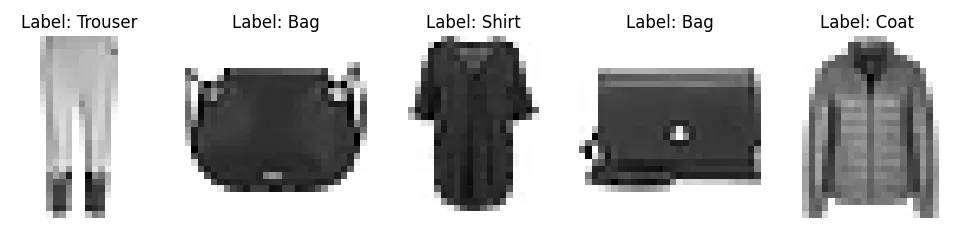
| Fashion Product Images Small | Image | 44,400 files | MIT | Image classifiers for fashion |
| Amazon Delivery Dataset | Text | 43,000 records | MIT | Analysing effectiveness of logistics delivery operations |
| Women's E-Commerce Clothing Reviews | Text | 23,486 rows | CC0 | Sentiment analysis or review classification |
| Furniture Dataset for Multi-Angle AI Training | Image | 10,364 images | Apache 2.0 | Recognition models |
| 7000 Dress Style Pictures | Image | 7,240 images | CC0 | Object recognition for fashion |
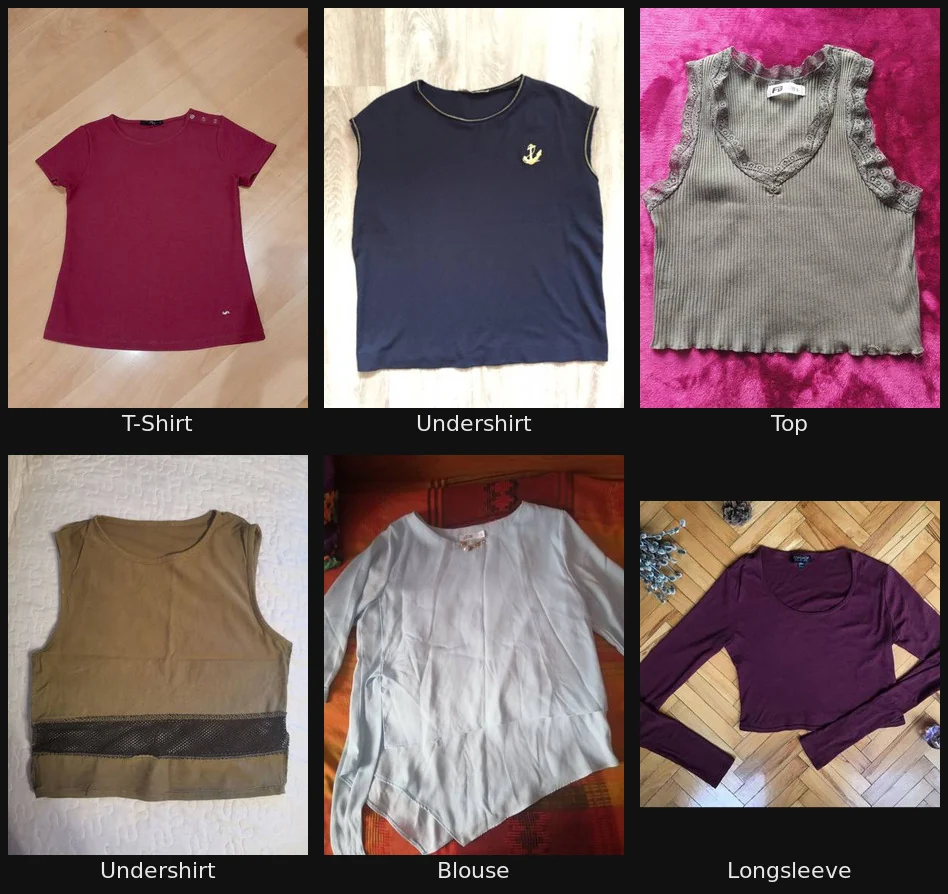
| Clothing Dataset Full | Image | 5,000 images | CC0 | Visual recognition for clothing items |
| Shoplifting Video Dataset | Video | 182 files | CC BY 4.0 | Detect suspicious behaviour in stores |
FreshRetailNet-50k - Food Retail Demand Prediction
- Size
- 4.85 million daily store-product records with hourly sales profiles (CSV/Parquet)
- Licence
- CC BY 4.0
4.85 million daily store-product records (4.5 million train, 350,000 eval) in CSV and Parquet, each with an hour-by-hour sales profile, covering 50,000 series over 90 days of perishable food sales across 898 stores in 18 cities, with stockout flags, promotions, weather and holiday context. A proper demand-forecasting benchmark.
Improving demand forecasting in food retail, testing stockout and latent demand detection, and training large-scale contextual time series models.
Source: innovatiana.com
Amazon Polarity
- Size
- Around 4 million reviews (train + test), JSON format with title, content and binary label fields
- Licence
- Apache 2.0
Around four million Amazon customer reviews in JSON with title, content and binary positive-or-negative label, spanning eighteen years of commerce. Large and permissively licensed, it is the workhorse sentiment classification corpus.
Training sentiment classification for e-commerce, improving customer feedback analysis and recommendation, and testing NLP robustness on large real-world volumes.
Source: innovatiana.com
Sephora Skincare Reviews
- Size
- About 1 million reviews of ~2,000 skincare products, plus metadata for 8,000+ products, CSV/JSON
- Licence
- Attribution 4.0 International (CC BY 4.0)
Roughly one million customer reviews of about 2,000 Sephora skincare products, plus metadata for more than 8,000 products across all categories, in CSV and JSON. Collected in 2023, giving recent beauty-sector language and pricing.
Sentiment analysis of customer opinions on products and brands, building personalised recommendation systems, and analysing ingredient, pricing and popularity trends.
Source: innovatiana.com
Clothing Fit Dataset for Size Recommendation
- Size
- 82,790 ModCloth entries in JSON format (40 MB), structured customer-product data with text (the release also includes RentTheRunway: 192,544 more)
- Licence
- CC BY 4.0
82,790 JSON entries of about 40 MB combining structured customer and product data with written feedback, labelled for whether a size ran true, too small or too large. A genuine tabular-plus-text recommendation problem.
Building customised size recommendation for e-commerce, creating fit classification models from written reviews, and developing summarisation or sentiment models.
Source: innovatiana.com
E-commerce Text Classification
- Size
- 50,425 text entries in CSV, 4 classes
- Licence
- Attribution 4.0 International (CC BY 4.0)
50,425 product text entries in CSV, each labelled with one of four e-commerce categories. Simple and well-sized for supervised text classification baselines or catalogue auto-tagging prototypes; check the per-class counts before relying on a single accuracy figure.
Training NLP models to classify products from descriptions, setting up automatic categorisation in an e-commerce platform, and testing supervised classification algorithms.
Source: innovatiana.com
Fashion Product Images Small
- Size
- Approximately 44,400 files: images (JPEG) and JSON files with product descriptions
- Licence
- MIT
About 44,400 files combining JPEG product photographs with JSON descriptions, giving paired image and text for each fashion item. MIT licensed, so one of the few commercially usable fashion catalogues at this scale.
Training image classifiers for fashion, NLP analysis of product descriptions, and multi-label classification of product categories and attributes.
Source: innovatiana.com
Amazon Delivery Dataset
- Size
- Over 43,000 records, CSV tabular format
- Licence
- MIT
Over 43,000 CSV records of last-mile logistics covering orders, delivery agents, weather, traffic conditions and performance outcomes. A compact, MIT-licensed basis for delivery-time and routing analysis.
Analysing effectiveness of logistics delivery operations, identifying factors affecting deadlines and satisfaction, and optimising routes and delivery resources.
Source: innovatiana.com
Women's E-Commerce Clothing Reviews
- Size
- 23,486 rows in CSV format, text and categorical data
- Licence
- CC0: Public Domain
23,486 CSV rows of anonymised online clothing reviews combining free text with ratings, customer ages, recommendation flags and product categories. Compact, clean and a long-standing teaching set for applied NLP.
Training sentiment analysis or review classification, studying customer experience by age or product category, and exploring BERT, TF-IDF or Word2Vec on real data.
Source: innovatiana.com
Furniture Dataset for Multi-Angle AI Training
- Size
- 10,364 JPEG images divided into 6 categories
- Licence
- Apache 2.0
10,364 annotated JPEG furniture photographs across six categories, shot from multiple angles per item. The multi-angle coverage is what distinguishes it from flat catalogue imagery, supporting 3D and AR work.
Training recognition models for furniture and decoration objects, improving augmented reality or 3D design applications, and powering visual recommendation in furniture e-commerce.
Source: innovatiana.com
7000 Dress Style Pictures
- Size
- 7,240 JPEG images in 640x640
- Licence
- CC0: Public Domain
About 7,240 pre-resized 640x640 JPEG photographs of women's dresses, including rotation, blur, noise and flip augmentation variants. Already uniform in size, so it drops straight into a training pipeline.
Training object recognition for fashion, building a style or outfit recommendation engine, and prototyping virtual try-on or look analysis.
Source: innovatiana.com
Clothing Dataset Full
- Size
- Over 5,000 images in 20 classes (the author's count)
- Licence
- CC0: Public Domain
Over 5,000 clothing photographs sorted into 20 classes, the full-size Kaggle release of Alexey Grigorev's clothing dataset. Public-domain licensing and modest size make it the easiest fashion classification set to pick up for tutorials or quick prototypes.
Developing visual recognition for clothing items, improving e-commerce product recommendations, and creating image classification tutorials and courses.
Source: innovatiana.com
Shoplifting Video Dataset
- Size
- 182 files (.mp4 videos) — 640×480 resolution — 30 FPS — 2 classes
- Licence
- CC BY 4.0
182 MP4 clips at 640x480 and 30 FPS in two classes, showing normal behaviour and simulated shoplifting staged in a lab. Small and synthetic in the sense of being acted, so generalisation to real CCTV is unproven.
Training models to detect suspicious behaviour in stores, testing action recognition on video streams, and prototyping intelligent surveillance systems.
Source: innovatiana.com
How this list was put together
Shortlisted from the 18 datasets in Dataset Finder's verified set of 434 open datasets tagged “Retail, fashion & e-commerce”. Where the theme holds more than twelve, we prefer datasets whose licence is stated unambiguously and whose published scale is largest, so that the list is usable rather than merely long.
Sizes and licences come from each dataset's own documentation, vague wording included. Where we found a re-upload or catalogue card stating a licence that the original release contradicts, the entry gives the original terms and says so. The comparison table abbreviates licences to standard identifiers and marks vague ones as unclear.