Speaker tasks need a dataset property most speech corpora do not optimise for: repeated recordings of the same person on different occasions. A corpus with thousands of speakers and one recording each is nearly useless here, however large.
An honest note on availability
Searching our verified set of 434 open datasets for speaker-focused sets turned up very few — one canonical speaker-recognition corpus and a dialect-annotated phonetic set, plus a number of ASR corpora that mention speakers incidentally.
We could have padded a list with those ASR corpora. We have not, because a recognition corpus that happens to record speaker identity is generally poor speaker-task data for the reason below, and you would have found that out after downloading it.
Our speech and audio datasets post covers the speech sets in Dataset Finder. This post covers what the task needs, so you can assess a candidate yourself.
Three tasks, different data
Worth separating, because they are often discussed together and need different things.
Verification asks whether two recordings are the same person — an open-set, one-to-one comparison. This is what voice authentication does, and it needs the session property described below.
Identification picks a speaker from a known enrolled set — closed-set, one-to-many. Needs enrolment audio per speaker, and gets harder as the enrolled set grows.
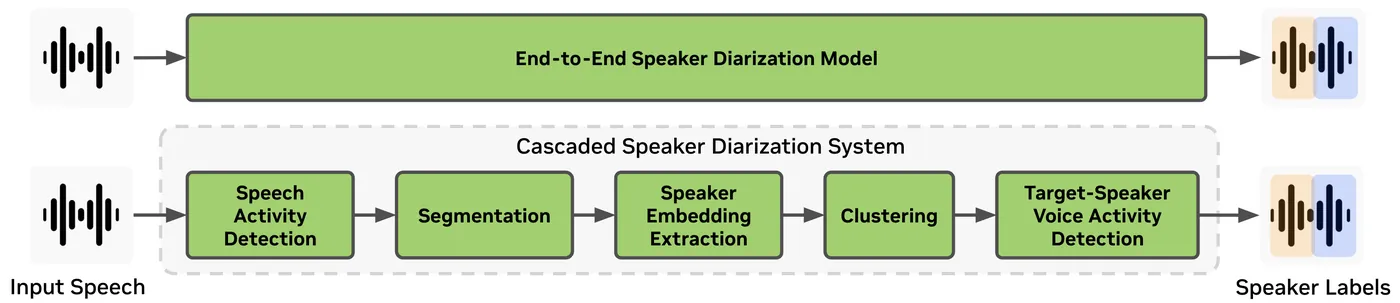
Diarisation segments a recording by who is speaking when, usually without knowing who they are. Needs multi-speaker audio with timed speaker labels, which is a different annotation entirely — and critically, needs overlapping speech if you want it to work on real conversations.
The property that matters: sessions per speaker
This is the thing to check first and the reason most corpora disappoint.
A speaker model must learn what varies within a person versus between people. Within-speaker variation is large: your voice differs with a cold, time of day, mood, microphone, room, and how close you are to it.
If each speaker appears in exactly one recording session, the model cannot separate speaker identity from session characteristics. It learns to recognise the recording — the room, the microphone, the channel — and reports excellent accuracy on a test set drawn from the same sessions. In deployment, where someone calls from a different phone, it fails.
So the question to ask of a candidate dataset is not how many speakers but how many separate sessions per speaker, and whether those sessions differ in channel and condition. Multiple sessions across varied conditions is the property; raw speaker count is a distraction.
Diarisation fails on overlap
If you are building diarisation, this is the single most important thing to check in your data.
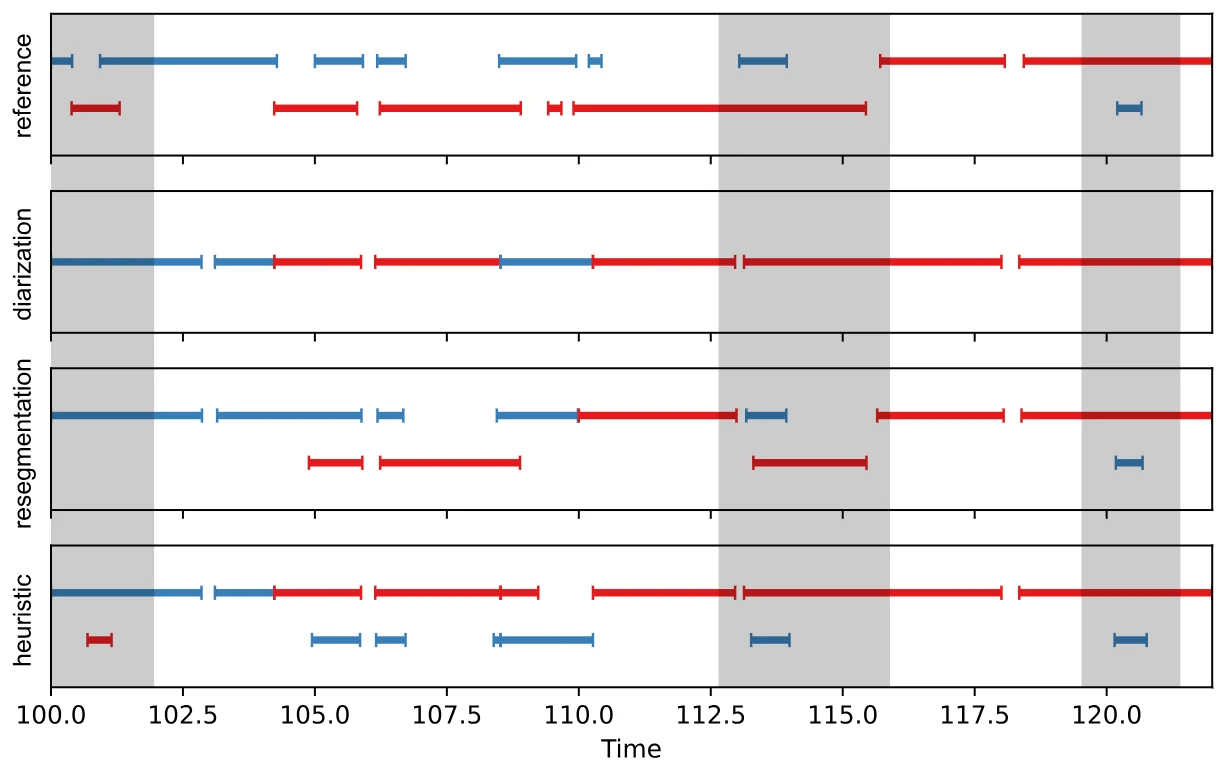
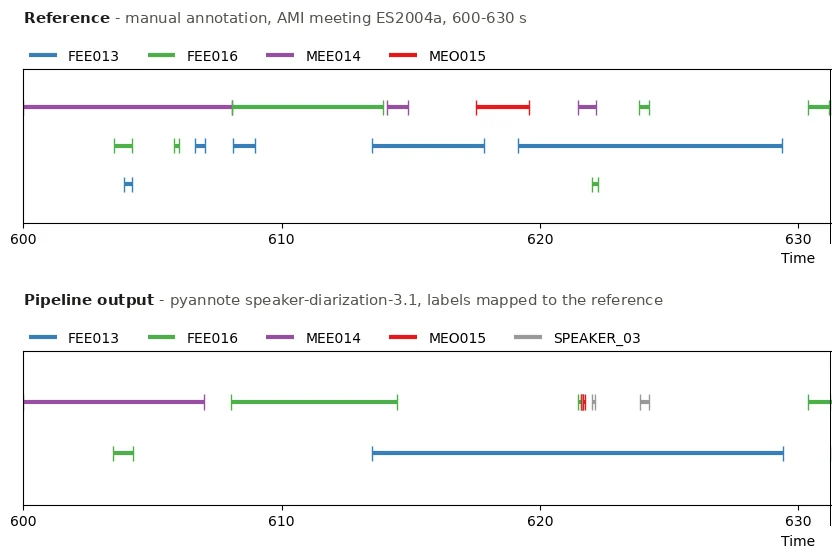
Real conversations contain simultaneous speech: interruptions, back-channel agreement, crosstalk in meetings. Depending on the setting, overlapping speech can be a substantial fraction of a recording, and it is where diarisation systems do most of their failing.
Many datasets either avoid overlap by construction — read speech, turn-taking prompts — or do not annotate it, labelling only the dominant speaker. A system trained and evaluated on such data will report a good error rate and then struggle on a real meeting.
So check whether overlapping regions are annotated as overlapping, and whether your evaluation metric accounts for them. If your deployment target is meetings or calls, deliberately include and measure overlap, because the aggregate error rate will otherwise hide the only hard part of the problem.
Biometric obligations apply
Voice is personal data and in several regimes biometric data, which brings heightened obligations — the same position as face data.
A dataset's permissive licence does not resolve this, because the licence is granted by the compiler while the rights belong to the speakers. And consent given for speech recognition research does not straightforwardly extend to training a biometric identification system, which is a materially different use that many older corpora's consent documentation never contemplated.
If you are building voice authentication specifically, treat the data question as a compliance question from the start rather than a search problem. For an internal system, recording your own enrolment data with explicit consent is both cleaner legally and better matched to your actual channel conditions — which, given the session-variability point above, is also the technically better answer.
Questions people ask
How many speakers do I need?
For verification, more speakers helps the model learn general speaker-discriminative features — hundreds upward is typical. But sessions per speaker is the binding constraint: a hundred speakers with five varied sessions each beats a thousand with one.
Can I use an ASR corpus with speaker labels?
Only if it has multiple sessions per speaker under varied conditions. Most large recognition corpora do not — each contributor records once, so speaker identity and session characteristics are confounded. Check before committing.
What error rate should I expect for diarisation?
Highly dependent on conditions, and overlap is the dominant factor. Published figures on clean two-speaker audio are much better than on multi-party meeting recordings. Compare numbers only across the same conditions, and check whether overlap was scored.
Do I need separation as well as diarisation?
If overlapping speech matters and you need the words, yes — diarisation tells you who spoke when, separation recovers each voice from the mixture. They are separate stages, and transcribing overlapped speech generally needs the second.