Summarisation data is easy to find and hard to evaluate, because there is no single correct summary of anything.
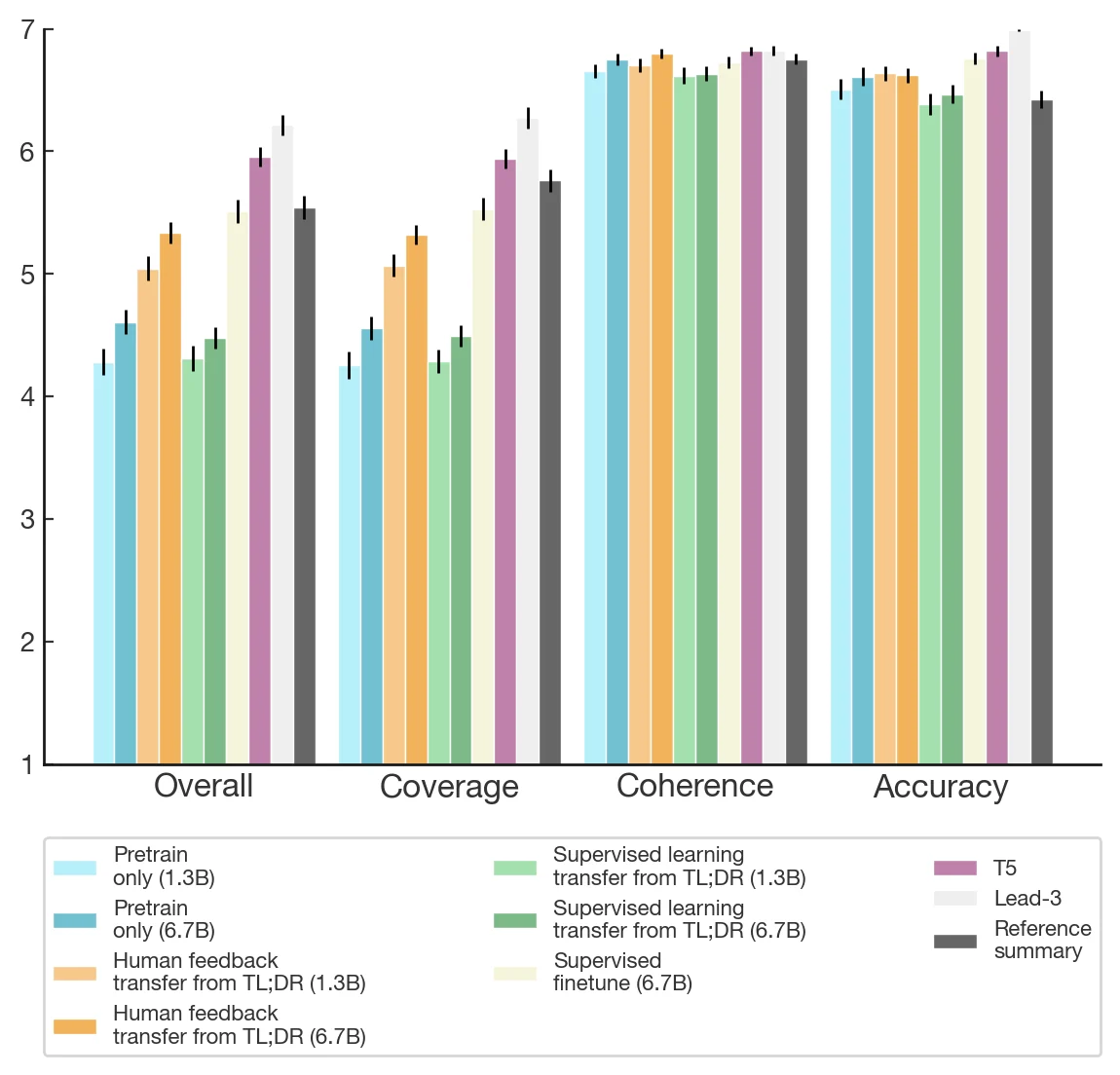
The structural problem is that a reference summary is one of many acceptable outputs, so metrics comparing your output to it penalise perfectly good summaries that made different choices. This is worth knowing before you optimise a score: a higher overlap metric does not reliably mean a better summary, and human or rubric-based evaluation is closer to what you care about.
The other thing to check is what kind of summary the dataset actually contains. News sets often use the article's own lead paragraph as the reference, which trains a model to extract the opening rather than to summarise. Dialogue, scientific and legal summarisation each have their own conventions about length and what must be preserved. Read a handful of reference summaries and ask whether they are what you would want your model to produce.
The list is short because summarisation is defined by its reference summaries, and most text corpora do not have them. A large document collection is a source of inputs, not a summarisation dataset, so those were removed. Of the four that remain, notice how different the references are: journalist-written highlights, official summaries of legislation, a Reddit author's own TL;DR, and summaries generated by a model. A system trained on one of these learns that style of summary, so choose the reference style you want your model to produce, not the largest set.
| Dataset | Modality | Size | Licence | Best for |
|---|---|---|---|---|
| Newspaper Text Summarization CNN DailyMail | Text | 312,000 articles | Unclear — see below | Extractive or abstractive summarisation |
| BillSum - Summaries of American laws | Text | 23,000 documents | CC0 | Summarisation models for legislative texts |
| TLDR-17 | Text | 3.8M posts | CC BY 4.0 | Abstractive summarisation models |
| PhilPapers Papers Summarized Labeled | Text | 3,776 documents | MIT | Multi-label classification on academic texts |
Newspaper Text Summarization CNN DailyMail
- Size
- Approximately 312,000 articles in English, JSON/text format, including full article and highlights
- Licence
- Labelled CC0 on this re-upload; the canonical release states Apache 2.0, and the articles remain CNN's and the Daily Mail's copyright
Over 300,000 English news articles from CNN and the Daily Mail in JSON and text, each paired with the journalist-written highlights that serve as a reference summary. The long-standing news summarisation benchmark. The CC0 tag comes from a re-upload: the canonical release states Apache 2.0, and the article text remains the publishers' copyright either way.
Training extractive or abstractive summarisation, evaluating summary quality from NLP systems, and studying automatic comprehension of long texts.
Source: innovatiana.com
BillSum - Summaries of American laws
- Size
- Approximately 23,000 documents, texts and summaries in JSON, total size ~340 MB
- Licence
- CC0 1.0
Roughly 23,000 full texts of US Congress and California bills paired with human-written summaries, in JSON totalling about 340 MB. Mid-length legislative summarisation (the authors kept bills of 5,000 to 20,000 characters and set very long bills aside), released into the public domain.
Training summarisation models for legislative texts, aiding search and comprehension of complex legal documents, and developing automated legal assistants.
Source: innovatiana.com
TLDR-17
- Size
- Approximately 3.8 million posts with summary, JSON files, total size ~19 GB
- Licence
- CC-BY 4.0
Over 3.8 million English Reddit posts in about 19 GB of JSON, each with an author-written short summary averaging 28 words, plus fields for author, content, summary and originating subreddit. Summaries are human, not generated.
Training abstractive summarisation models, evaluating NLP performance on real social content, and developing content synthesis for forums and social networks.
Source: innovatiana.com
PhilPapers Papers Summarized Labeled
- Size
- 3,776 documents in JSON format, including titles, summaries, multi-label labels
- Licence
- MIT
3,776 PhilPapers philosophy documents in JSON, each with a title, an LLM-generated two to three sentence summary, and multi-label tags across 17 philosophical schools. A rare labelled humanities corpus.
Training multi-label classification on academic texts, developing automatic summarisation in philosophy, and exploring trends across schools of thought.
Source: innovatiana.com
How this list was put together
Found by searching Dataset Finder for datasets whose documentation describes the task, then checked by hand. A keyword match is not a fit — the first pass picked up a coral survey for the depth-estimation list because it was recorded below fifty metres — so every entry was read against what this page covers, and the ones that matched a word without matching the task were removed.
Sizes and licences come from each dataset's own documentation, vague wording included. Where we found a re-upload or catalogue card stating a licence that the original release contradicts — a CC0 tag on Flickr photographs, MIT on data whose terms require a signed agreement — the entry gives the original terms and says so. The comparison table abbreviates licences; hover a cell for the full wording.